
Last updated November 15, 2026
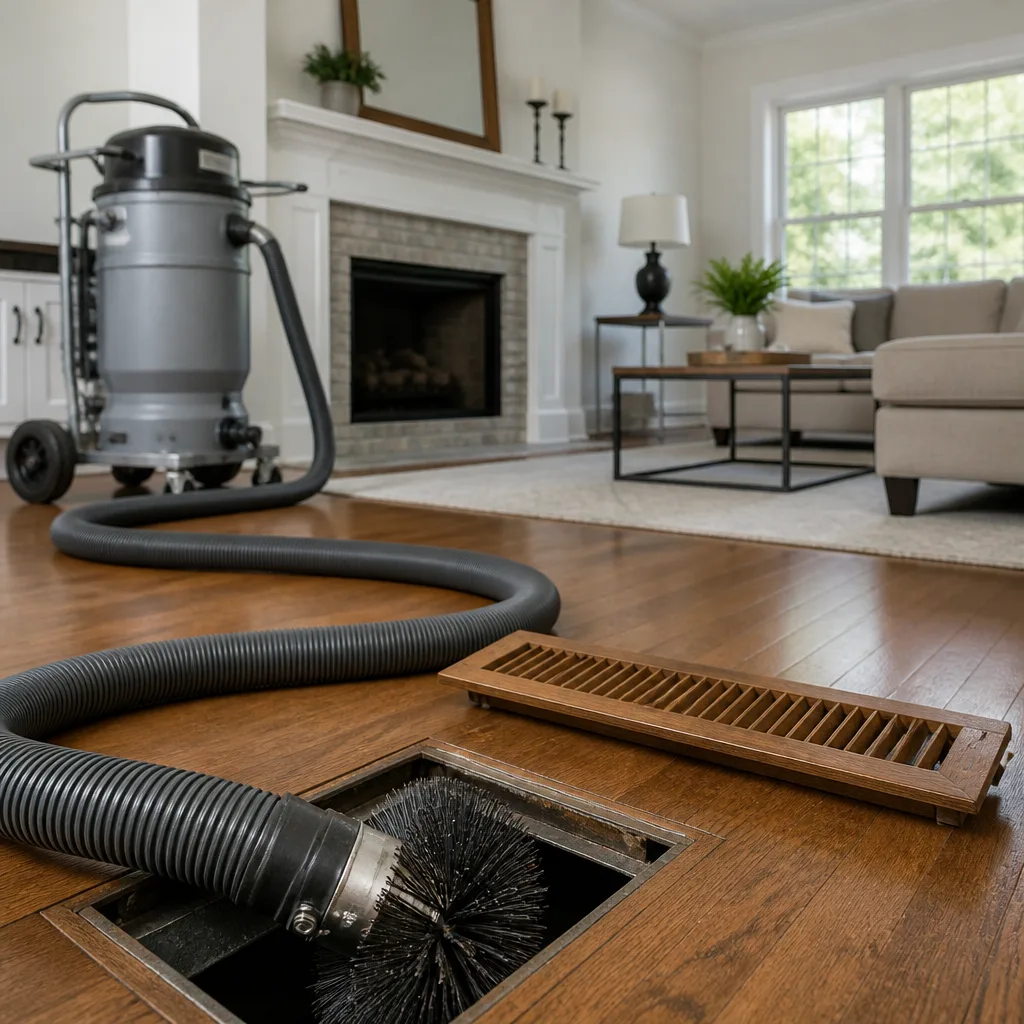 Whole-home duct cleaning
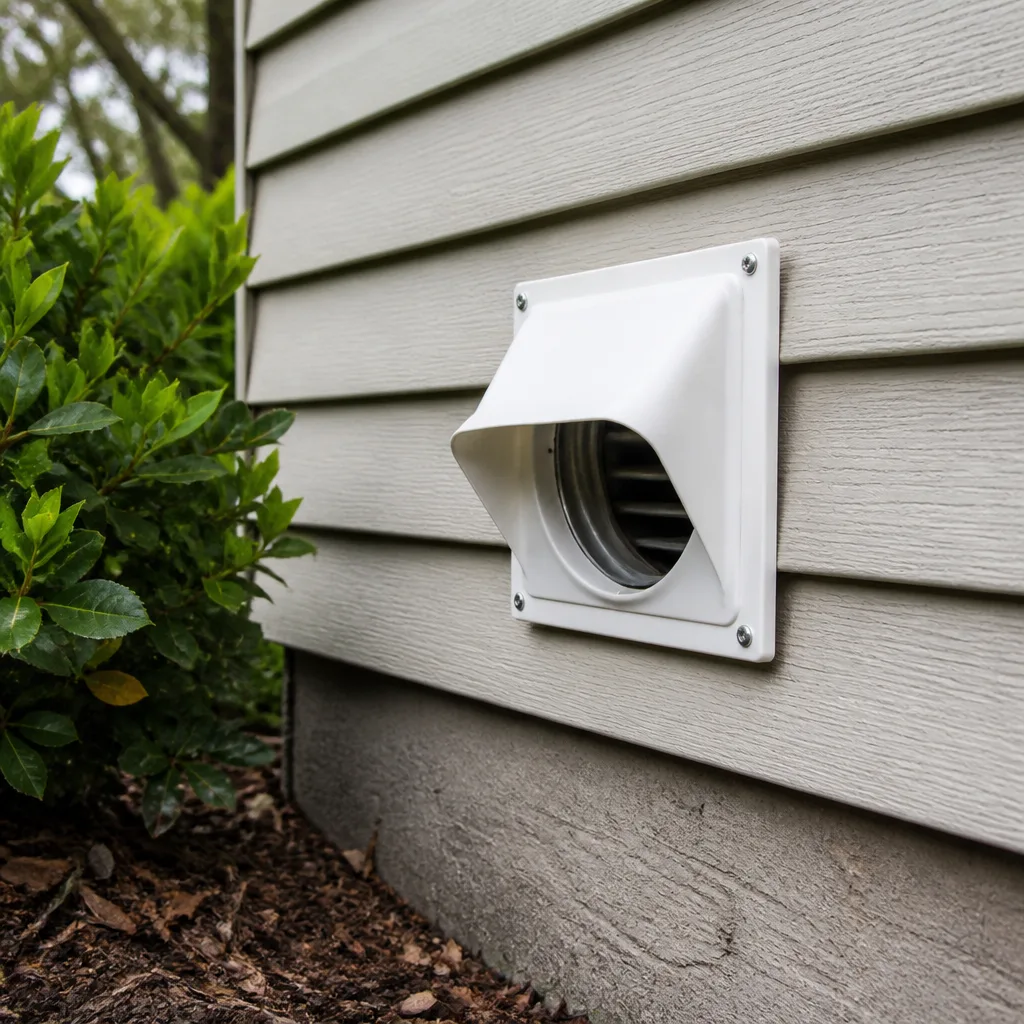 Dryer vent cleaning
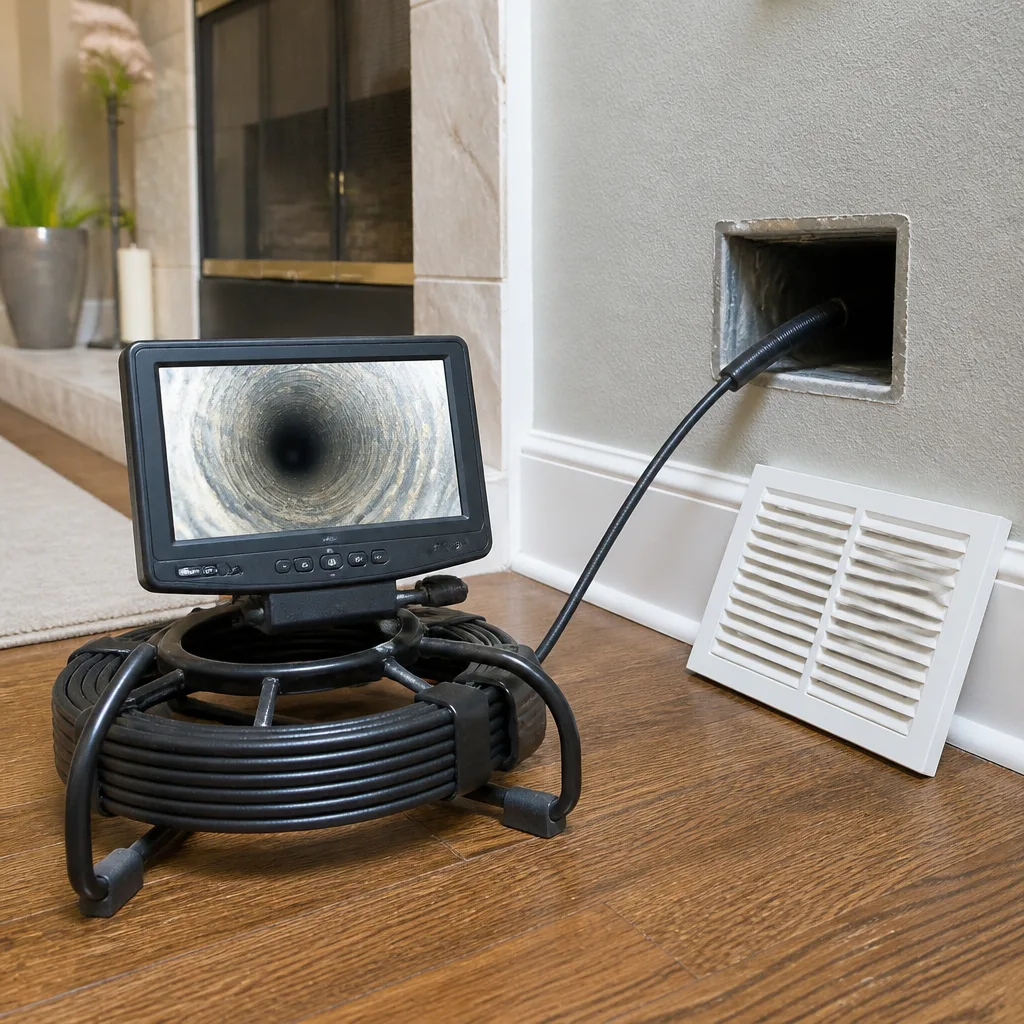 Camera inspection
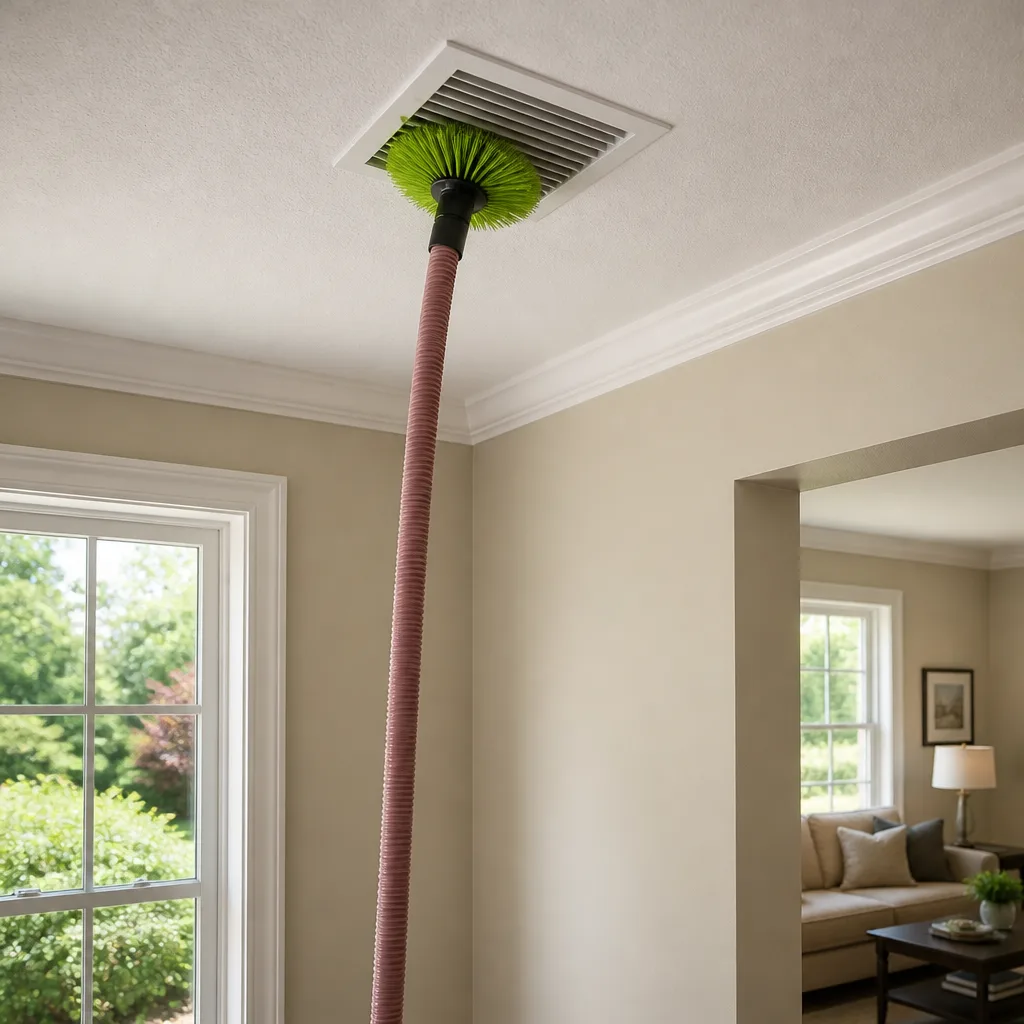 Sanitizing & deodorizing
Whole-system duct and dryer vent check with before-and-after photos - you see exactly what came out of your vents
That "$99 whole-house special" is a bait ad - the real number appears once they are in your hallway, or the "clean" is a shop-vac at the register. We photograph the inside of your ducts before and after instead.
Air Duct Cleaning Maintenance Schedule: What to Do and When
The advice to clean your ducts every three to five years was written for a theoretical average home. Not a 1970s ranch in Hamburg with two dogs, a one-inch fiberglass filter, and a pollen season that coats every screen in central Kentucky by mid-April. Your house has its own interval, and it’s set by four things: how the home was built, what grade of filter you run, how many people and pets move through it, and how much pollen and renovation dust it sees in a year. This guide replaces the fixed calendar with a framework you can actually calibrate – a variable-based scoring model, a between-service checklist, and a Lexington-specific timing rhythm that follows oak and grass pollen rather than an arbitrary annual date.
Quick Answer
Most Lexington homes don’t need duct cleaning on a fixed three-to-five-year calendar. Instead, start from a five-year baseline and adjust it up or down based on pets, allergies, recent renovation, home age, crawlspace construction, and filter grade – many homes land between three and seven years, and homes near new construction or with multiple pets often need a pass sooner. Between professional cleanings, change filters on a schedule matched to filter grade, inspect registers seasonally, and log what you find. When the model points to “now,” call (877) 331-2339 for a free estimate.
Styles & brands we work with
- Whole-home duct cleaning
- Dryer vent cleaning
- Camera inspection
- Sanitizing & deodorizing
Table of Contents
- Why the Three-to-Five-Year Rule Falls Apart
- The Variable-Based Scoring Model
- The Between-Service Maintenance Checklist
- Lexington Seasonal Timing: Spring After Pollen Peak
- How Filter Grade Changes Your Interval
- Your One-Page Annual Home Air Quality Log
- When the Schedule Reveals a Duct Problem
- Common Mistakes to Avoid
- When to Call a Professional
Why the Three-to-Five-Year Rule Falls Apart
The three-to-five-year number gets repeated everywhere because it’s simple, not because it’s accurate. It assumes an average home with an average filter, average occupancy, and average outdoor dust load. Very few Lexington houses are average on all four counts at once. A slab-on-grade home in Beaumont with two adults, no pets, and a MERV-13 filter is a genuinely different system from a crawlspace home off Harrodsburg Road with three kids, two retrievers, and a one-inch fiberglass filter that gets changed when someone remembers.
The rule also treats ducts as a static container. They aren’t. Ducts are a moving-air system, and what settles inside them depends on what the air carries and how well the filter catches it. A filter that lets fine particulate through means that particulate ends up coating the interior of the trunk and branch runs. A tighter filter catches more of it, so less reaches the duct walls. Same house, same neighborhood, different interval.
Here’s what actually drives accumulation:
- Construction type. Crawlspace homes pull return air through a space that sees more ground-level dust and humidity swings than a sealed slab or basement.
- Filter grade. A one-inch fiberglass filter is a debris screen, not a particulate filter. It stops the big stuff and lets the fine material pass straight through.
- Occupancy. People shed skin cells, hair, and lint. Pets multiply that several times over. Two adults and no pets is not the same load as a family of five with a shedding dog.
- Local particulate load. Central Kentucky’s oak and grass pollen season is heavy, and it runs through spring into early summer. Renovation dust, nearby construction, and agricultural dust on the edges of Fayette County add to the seasonal total.
Any one of those variables can move your real interval a year or two in either direction. Stack two or three and the generic rule is off by half. That’s why the schedule below is built as a scoring model rather than a calendar. Duct cleaning in Lexington isn’t a set-it-and-forget-it service – it’s a decision you re-run each year against current conditions.
The Variable-Based Scoring Model
Start with a five-year baseline. Then add or subtract years based on your specific home. The result is your working interval – not a guarantee, just a defensible starting point you refine each year with your air quality log.
How to Score Your Home
- Begin at 5 years. This is your baseline for a typical occupied home with a mid-grade filter.
- Subtract 1 year if you have one or more indoor pets. Subtract 2 if you have more than two, or a heavy-shedding breed.
- Subtract 1 year if anyone in the household has diagnosed allergies or asthma, since particulate load matters more in that house.
- Subtract 1 year for any renovation in the last 24 months, or if you live within a quarter mile of active construction.
- Subtract 1 year if your home is on a crawlspace rather than a slab or sealed basement.
- Add 1 year if you run a MERV-11 filter or better and change it on schedule.
- Add 1 year if your HVAC system was installed in the last five years and the ductwork is new and sealed.
Run the math. A crawlspace home in Hamburg with two dogs and a child with allergies, running a one-inch fiberglass filter, scores: 5 minus 1 (pets) minus 1 (allergies) minus 1 (crawlspace) = 2 years. A newer slab home in Beaumont with no pets, a MERV-13 filter changed on time, and no allergies: 5 plus 1 = 6 years. That spread – two to six years – is exactly why the generic rule is useless for either house.
Two practical notes. Don’t let the model push you below two years; if it does, the issue is usually filtration, not duct cleanliness, and upgrading the filter is the better first move. And don’t let it stretch past about seven years without at least a visual inspection, because seals degrade and small breaches introduce debris that the model can’t predict. Our technicians have up to 8 years of experience reading these signals on-site, and a free estimate is the fastest way to check your score against what’s actually in the ducts.
The Between-Service Maintenance Checklist
Most of what keeps a duct system clean between professional visits is boring and cheap: filter discipline, register checks, and one coil inspection a year. Doing these extends the value of every cleaning you pay for, and they’re the difference between a house that hits its six-year interval and one that needs a pass at three.
Filter Change Cadence
- One-inch fiberglass: change every 30 days. These clog fast and pass fine particulate, so the cadence is short by necessity.
- One-inch pleated (MERV-8 to MERV-11): every 60 to 90 days, or monthly during pollen season if you notice loading.
- Four- or five-inch media filters: every 6 to 12 months, checked at the three-month mark.
- Any grade, during renovation: check weekly and change as soon as the filter face is visibly grey.
Write the change date on the filter frame in marker. It sounds trivial until you’re standing in front of the return at 9pm trying to remember whether it was March or May.
Seasonal Register Walk-Through
- Look at the register face. Dust streaks radiating from the louvers mean air is bypassing the seal between the boot and the drywall or floor.
- Feel the airflow at each supply with the system running. A weak register is an early signal of a kinked or disconnected branch run, not just dirt.
- Shine a light into the return if the grille comes off easily. Visible matting on the duct wall near the grille is normal; a thick blanket of debris is a sign you’re due.
- Sniff. A musty or “dirty sock” odor when the fan kicks on points to moisture or biological growth, which is a call-now situation, not a schedule item.
- Check the condensate line and drain pan during cooling season. Standing water feeds the humidity that makes duct interiors hospitable to growth.
The Annual Coil Check
Once a year, have the evaporator coil inspected – either as part of an HVAC service call or during a duct cleaning visit. A dirty coil reduces airflow, which raises the temperature and humidity in the duct system, which makes debris stickier. You’re not cleaning the coil yourself; you’re confirming it’s clean enough that your ducts aren’t working against a downstream restriction. That single check does more for your interval than almost anything else on this list.
Lexington Seasonal Timing: Spring After Pollen Peak
If you’re going to schedule a cleaning, late spring is the practical window in Lexington. Oak pollen typically peaks in April, followed by grass pollen into early June, and by the time that settles, a house has pulled weeks of fine particulate through the return system. Cleaning after that load has already entered means you’re removing the season’s accumulation rather than storing it for another eleven months.
Why not fall? Fall cleaning removes summer’s dust but leaves the entire pollen season ahead of it. Fall is a reasonable second choice if your schedule only allows one cleaning, and for homes with heavy winter heating use it can work well. But the highest-value timing for most Lexington homes is late May through June, after the pollen has finished but before summer humidity peaks.
Season-by-Season Rhythm
- Spring (March-May): pollen peak. Change filters monthly, watch registers for loading, and note any odor events in your log.
- Late spring/early summer (late May-June): the ideal professional cleaning window in central Kentucky, after oak and grass pollen have settled.
- Summer (July-August): highest indoor humidity, which is when duct moisture problems show up. Watch for musty odors and check the condensate line.
- Fall (September-November): a fine second window if you missed spring. Good timing before the heating season starts pulling air through the system again.
- Winter (December-February): heating season. Filter loading accelerates with more runtime hours; keep the cadence up.
One local wrinkle: new subdivisions under construction in and around the Brannon Crossing and Citation Boulevard areas generate construction dust that neighbors pull into their systems for months. If you live near active building, treat that as a scoring-model renovation factor even if you didn’t renovate, and lean toward spring timing to clear the previous year’s load.
How Filter Grade Changes Your Interval
Filtration is the single biggest lever you control over how fast your ducts re-accumulate debris. The reason is straightforward: every particle the filter catches doesn’t reach the duct walls. Upgrade from a one-inch fiberglass filter to a MERV-11 pleated filter and you’re catching substantially more of the fine particulate that otherwise coats the trunk line and branch runs. That change alone typically adds a year to your interval, and in a pet-free home it can add two.
What to Know Before You Upgrade
- MERV-11 is a solid residential target. It catches the fine particulate that dirties ducts without over-restricting airflow in most residential systems.
- Watch your system’s static pressure. A filter that’s too restrictive starves the blower and can freeze the coil. If your system was designed around a one-inch filter, a four-inch media cabinet is usually the right upgrade path, not a high-MERV one-inch.
- Change on time regardless of grade. A MERV-13 filter left in place for a year is worse than a MERV-8 changed every two months – a loaded filter bypasses air around its frame.
This is where whole-home filtration becomes part of the schedule conversation. When we’re on a cleaning visit, we can look at your return setup and recommend a media cabinet or a whole-home air purifier from the Honeywell or Aprilaire lines, sized to your system rather than bolted on. The point isn’t the product; it’s that a properly sized filter changes how often you need us back. If you’re considering an upgrade before your next cleaning, start with our air duct cleaning service page to see what a visit covers, then ask about filtration when you book.
Your One-Page Annual Home Air Quality Log
You don’t need software. A single sheet on the fridge or a note in your phone gets the job done. The value is in the pattern – three filter changes in a month means something different from three in a year, and an odor event logged twice in the same season tells you more than either event alone.
What to Track
- Date of each filter change, and the grade. One line per change.
- Filter condition at change. Light grey, medium, or loaded to the frame. A word is enough.
- Odor events. Date and description – “musty when heat kicks on,” “dust smell after vacuuming.”
- Register observations. Any register that feels weak, any visible dust streaking around the boot.
- HVAC service dates. Coil cleanings, tune-ups, any blower work.
- Household changes. New pet, renovation started or finished, new baby, someone diagnosed with allergies. Any of these re-runs your scoring model.
- Professional cleaning date. When the last full cleaning happened, and what the technician noted about duct condition.
Once a year – say, in January – read the log back and re-score your home. If filter loading has increased, if a new pet joined the house, or if you’re seeing repeated odor events, your interval shortens. If the log shows clean filters, no odors, and steady airflow, you can stretch toward the top of your range. This is how the schedule stays calibrated to your actual house instead of a generic rule. If you’d like a professional second opinion on what the log is telling you, our Duct Cleaning Lexington team is happy to look at it with you during a free estimate.
When the Schedule Reveals a Duct Problem
A cleaning visit sometimes turns up something that isn’t a cleaning problem at all: a disconnected branch run in the attic, a crushed flex duct behind a knee wall, a return boot that was never sealed to the drywall, or a joint that’s been leaking into a crawlspace for years. These aren’t cosmetic. A disconnected run dumps conditioned air into an unconditioned space, pulls dirty air into the system, and undermines the whole interval you’ve been carefully scoring.
This is why we treat air duct repair as part of the same job rather than a referral. If a technician finds a breach during a cleaning, we can diagnose and fix it – resealing joints, reconnecting runs, replacing crushed sections – rather than cleaning around a problem that will undo the work in a season. It’s the difference between cleaning what’s there and correcting why it’s dirty.
Signs worth flagging before your next scheduled cleaning:
- One room that’s consistently hotter or colder than the rest of the house, with no other explanation.
- Visible dust trails around a register boot or at the seam between duct and drywall.
- A return that pulls noticeably weaker than it used to.
- Whistling or rushing sounds at a register that weren’t there before – a sign of a partially disconnected run.
If any of those are on your list, don’t wait out the schedule. Call (877) 331-2339 for a free estimate. We answer 24/7. Fast dispatch from 7am to 7pm, Sunday through Friday.
Common Mistakes to Avoid
- Treating three-to-five years as gospel. The number ignores your pets, your filter grade, your construction type, and Lexington’s pollen load. Run the scoring model instead, and re-run it annually with your log.
- Running a one-inch fiberglass filter and expecting long intervals. A debris screen doesn’t stop fine particulate, so it reaches the duct walls. If you’re not ready to upgrade the filter, plan on cleaning more often, not less.
- Cleaning in the middle of pollen season. If you clean in April, you’re cleaning before the oak and grass pollen load has finished entering the system. Late May through June gets you more value per visit in central Kentucky.
- Hiring on price alone. A low bid usually means a shop vacuum and a shop-vac-sized process. Ask what equipment the company uses – contact agitation with negative-air containment (Rotobrush, Nikro, Abatement Technologies) is a different job from suction alone.
- Ignoring a weak register. A single weak supply usually means a disconnected or crushed run, not dirt. Cleaning around it wastes the visit; fix the run first.
- Skipping the annual coil check. A dirty evaporator coil restricts airflow and raises duct humidity, making debris stickier and shortening your interval. It’s an HVAC service item, but it belongs on your duct schedule.
- Not writing anything down. Without a log, you can’t tell whether your filter loading is normal or climbing, and you can’t re-score the home at year’s end. The log is what turns the model from a guess into a calibrated schedule.
When to Call a Professional
Call a professional when your scoring model points to “now” – typically two to seven years after the last cleaning, depending on your variables. Call sooner if you see or smell the signs that a schedule can’t address: a musty odor when the fan kicks on, visible debris matting on the return side, a recently completed renovation, a new pet in a house already occupied by pets, or a register that’s gone weak. Call right away if you suspect a disconnected run, because that’s a repair problem, not a cleaning one, and waiting lets more debris into the system.
Duct Cleaning Lexington offers free estimates in Lexington – call (877) 331-2339. We answer 24/7. Fast dispatch from 7am to 7pm, Sunday through Friday. Bring your air quality log if you’ve kept one; it’s the fastest way for us to check your score against what’s actually in the ducts.
See the difference
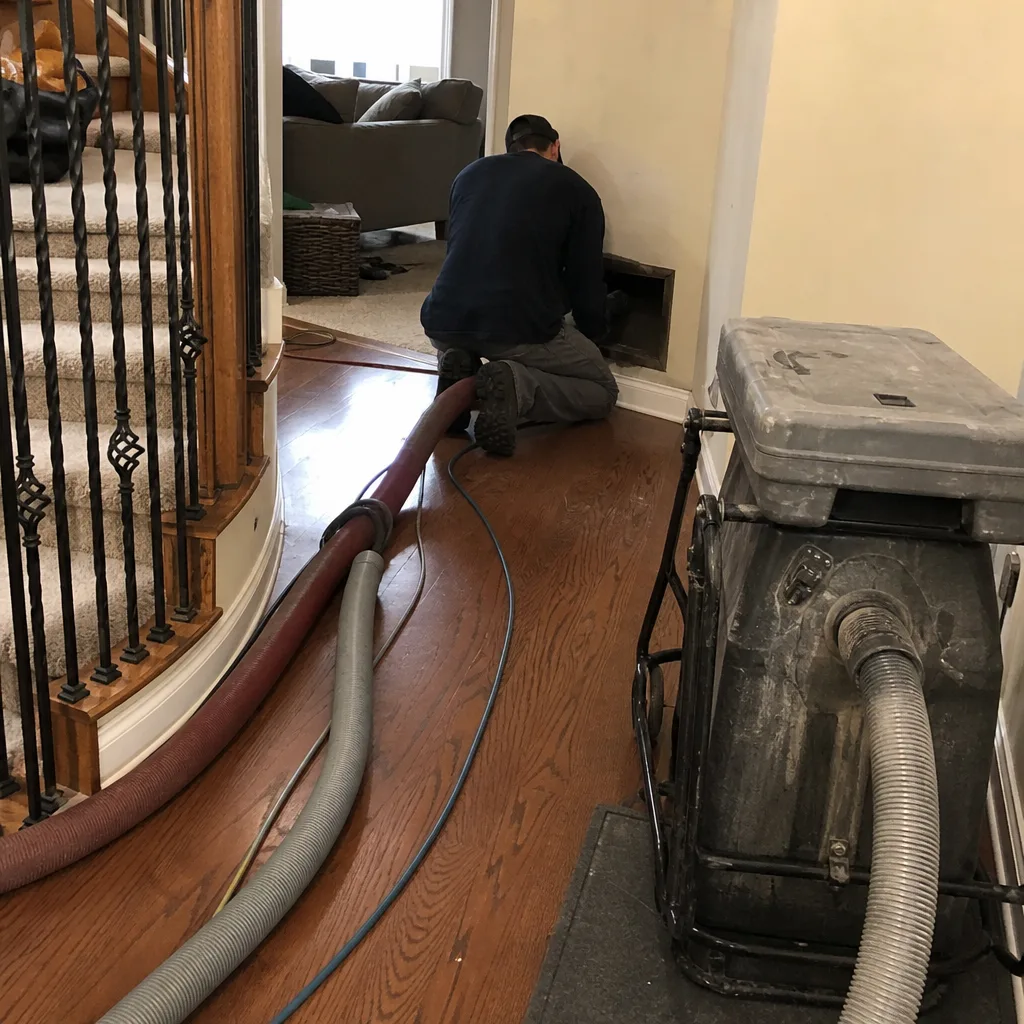 Before
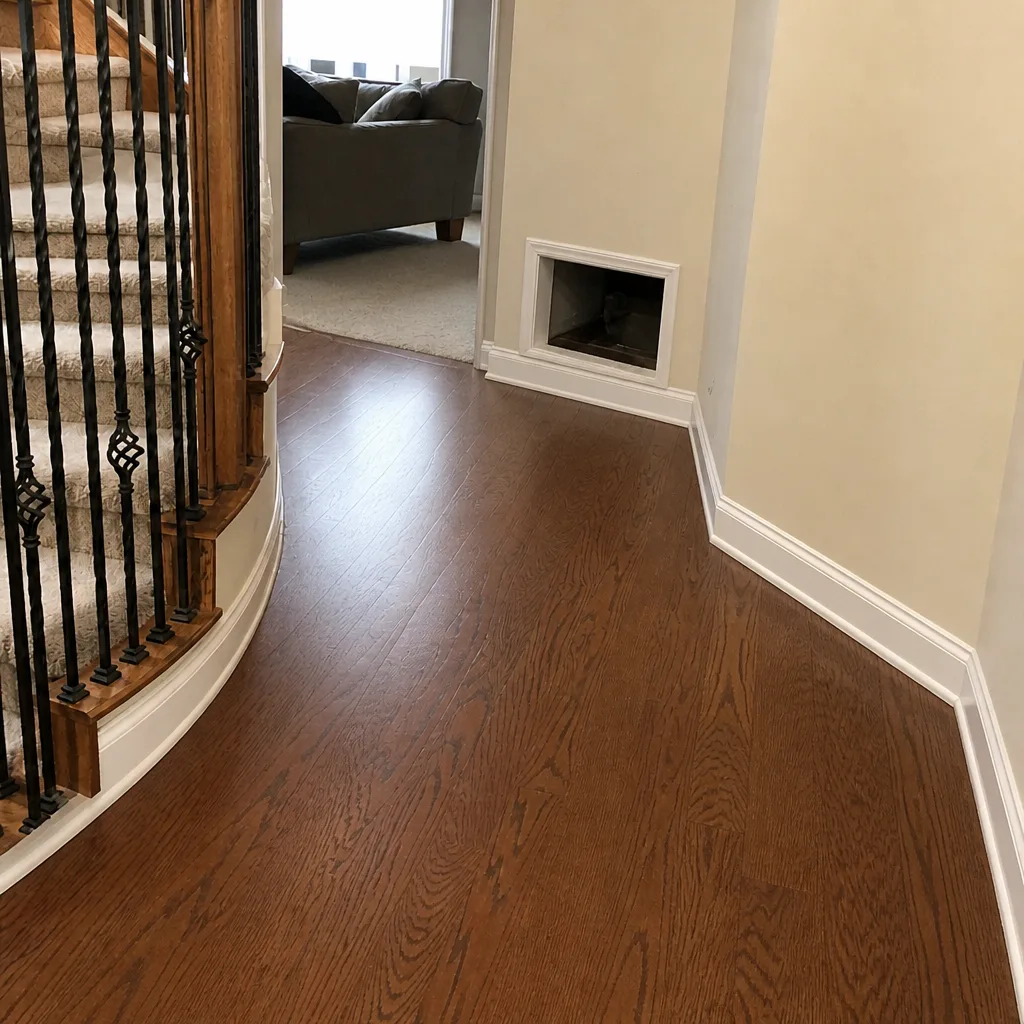 After
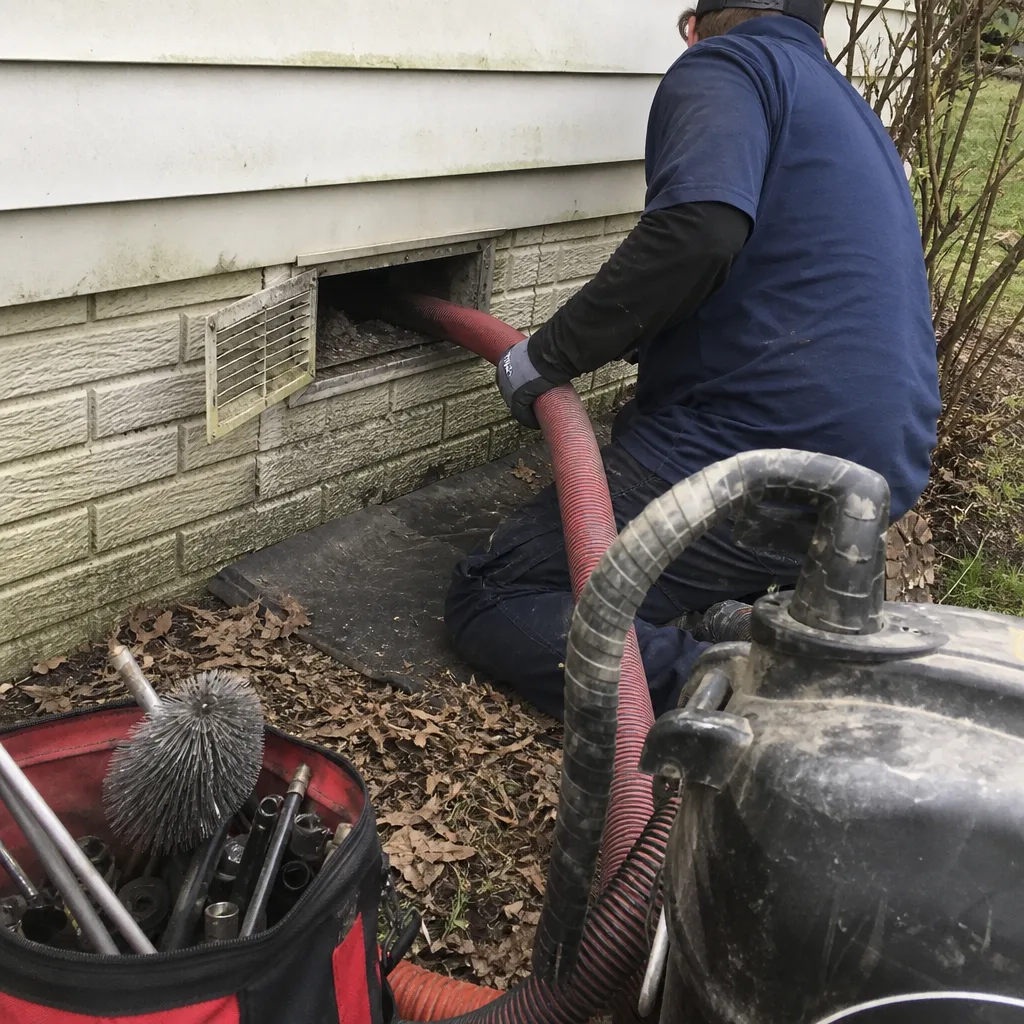 Before
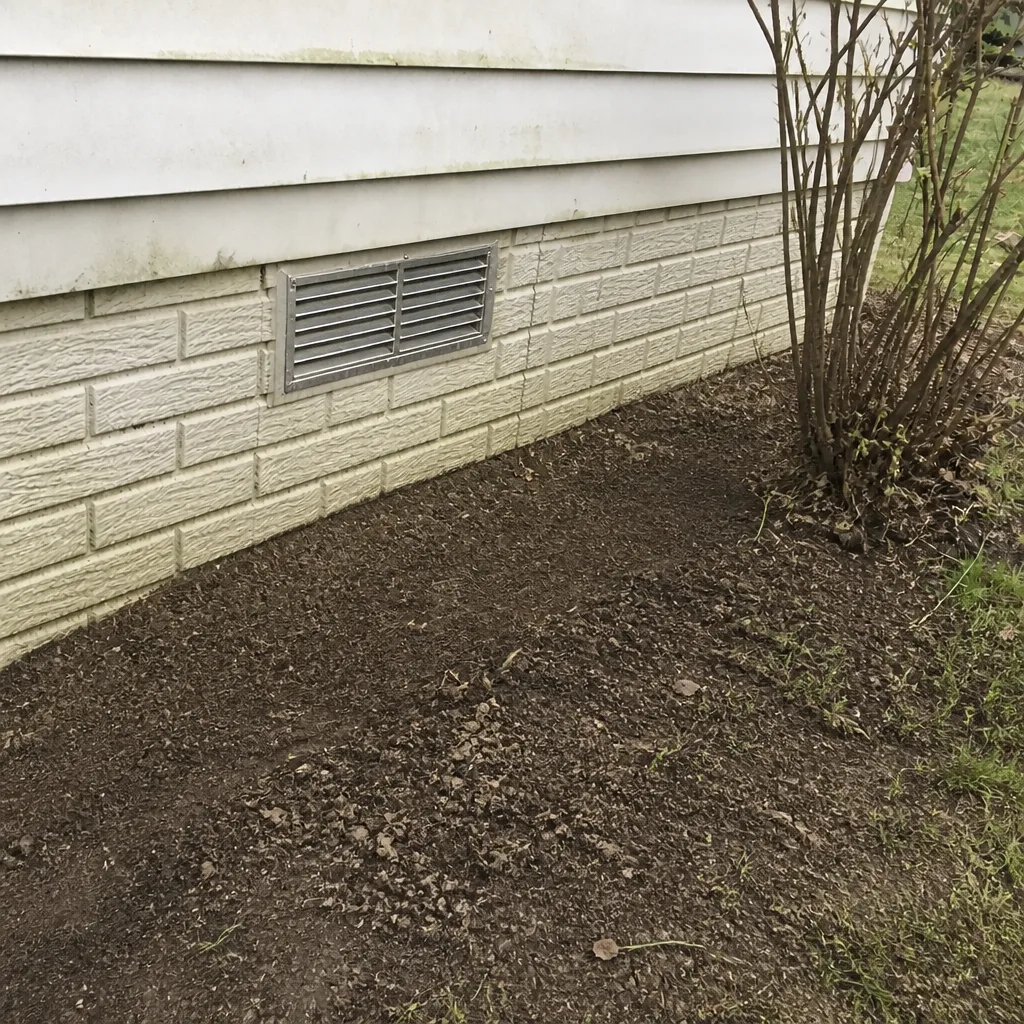 After
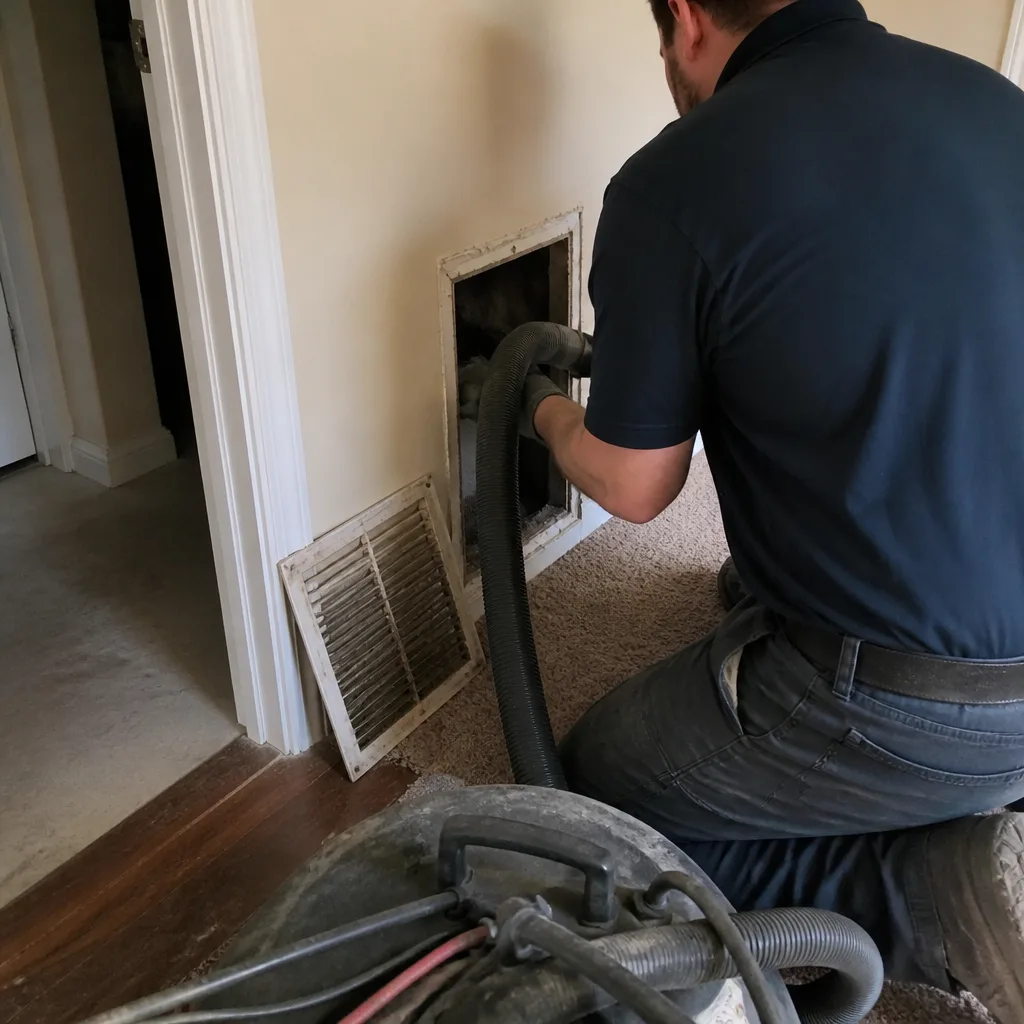 Before
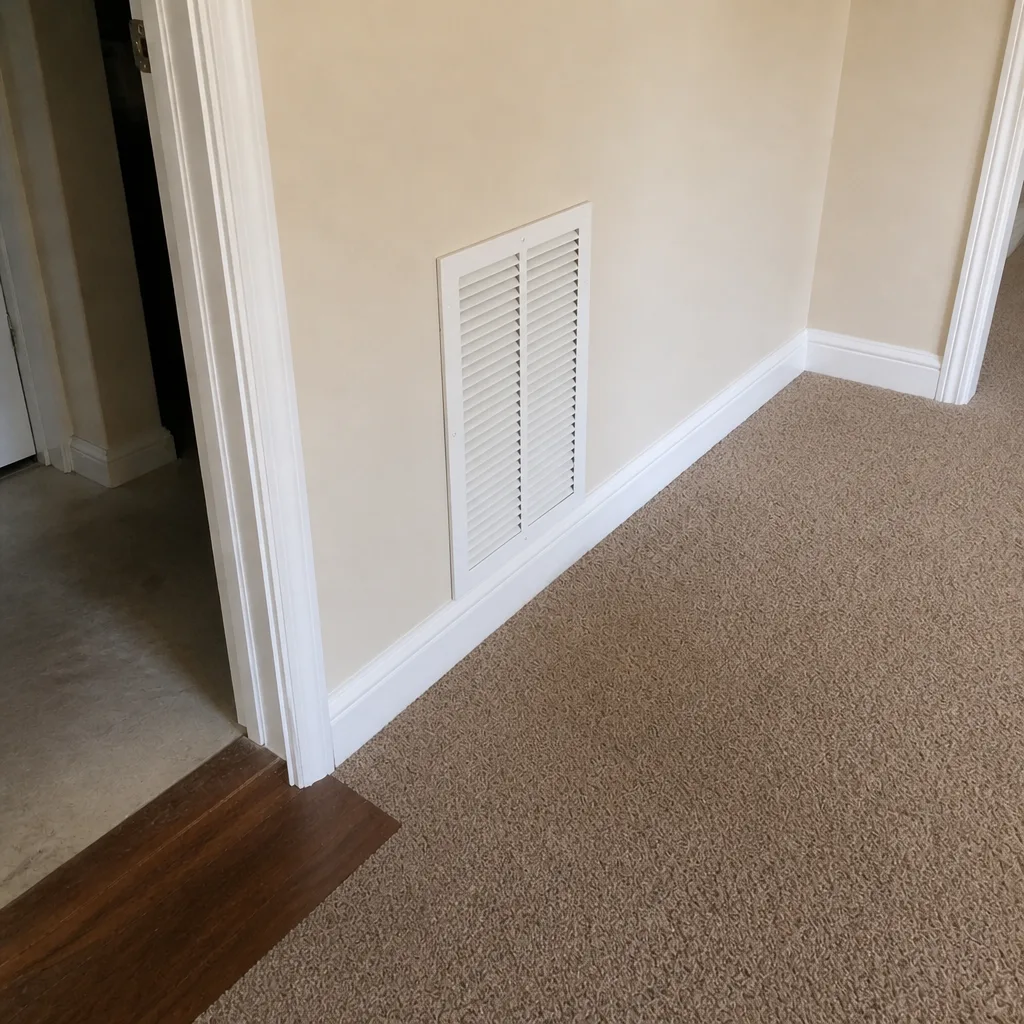 After
Frequently Asked Questions
Most Lexington homes should target a working interval of three to seven years, not a fixed three-to-five. Start at a five-year baseline and adjust for pets, allergies, renovation, crawlspace construction, filter grade, and HVAC age – the scoring model above walks through the math. Homes with multiple pets, recent renovation, or a crawlspace and a one-inch fiberglass filter often land at two to three years; newer slab homes with a MERV-13 filter and no pets can stretch to six or seven. Call (877) 331-2339 for an exact quote – estimates are free.
Cheap quotes usually reflect equipment and process, not efficiency. A low bid often means suction-only cleaning with a portable vacuum and no contact agitation or negative-air containment, which loosens surface dust but doesn’t reach the debris bonded to the duct walls. A proper job uses contact cleaning with something like a Rotobrush or Nikro system plus Abatement Technologies air scrubbing for containment. Ask what equipment the company uses before you compare prices. Call (877) 331-2339 for a written estimate that spells out the process – estimates are free.
Before-and-after photos of your own ductwork are the simplest proof, and you should ask for them before booking. A technician who uses contact agitation with a camera or photo documentation can show you the interior before and after on the same run. If a company can’t show you the inside of your ducts, you’re paying for a claim, not a result. Call (877) 331-2339 to see how we document a cleaning – estimates are free.
Yes, and it’s the biggest lever most homeowners control. A MERV-11 or higher filter catches the fine particulate that otherwise coats the duct interior, which typically adds a year to your interval and can add two in a pet-free home. The catch is airflow: a filter that’s too restrictive for your blower starves the system, so the usual upgrade path is a four- or five-inch media cabinet rather than a high-MERV one-inch filter. Call (877) 331-2339 to talk through a filter upgrade – estimates are free.
Late spring is the most practical window in Lexington, after oak pollen peaks in April and grass pollen settles in early June. Cleaning after that load has entered the house removes the season’s accumulation rather than storing it. Fall is a reasonable second window if spring doesn’t work for you – it clears summer dust before heating season. Call (877) 331-2339 to book a late-spring visit – estimates are free.
Dryer vents follow a different cadence than ductwork and shouldn’t wait for your air duct interval. A dryer vent that’s overdue is a fire risk, not an air quality issue, and it’s worth checking annually regardless of your duct score. Our dryer vent cleaning service is a standalone visit, so you can book it whenever your log flags it. Call (877) 331-2339 for an exact quote – estimates are free.
The Bottom Line
Your duct cleaning schedule isn’t a calendar – it’s a five-year baseline adjusted for pets, allergies, renovation, crawlspace construction, and filter grade, then re-scored each year against your own air quality log. In Lexington, late spring cleaning after oak and grass pollen peak gets more value per visit than an arbitrary annual date, and upgrading to a MERV-11 or better filter in a properly sized media cabinet extends your interval by a year or more. Do the between-service work – filters, register checks, coil inspection – and you’ll get more out of every professional visit. If you’re planning a cleaning or want a free estimate, our Lexington team is ready.
Call (877) 331-2339. We answer 24/7. Fast dispatch from 7am to 7pm, Sunday through Friday. Estimates are free and the written estimate sets the final price.
Written by the team at Duct Cleaning Lexington.