
Last updated November 15, 2026
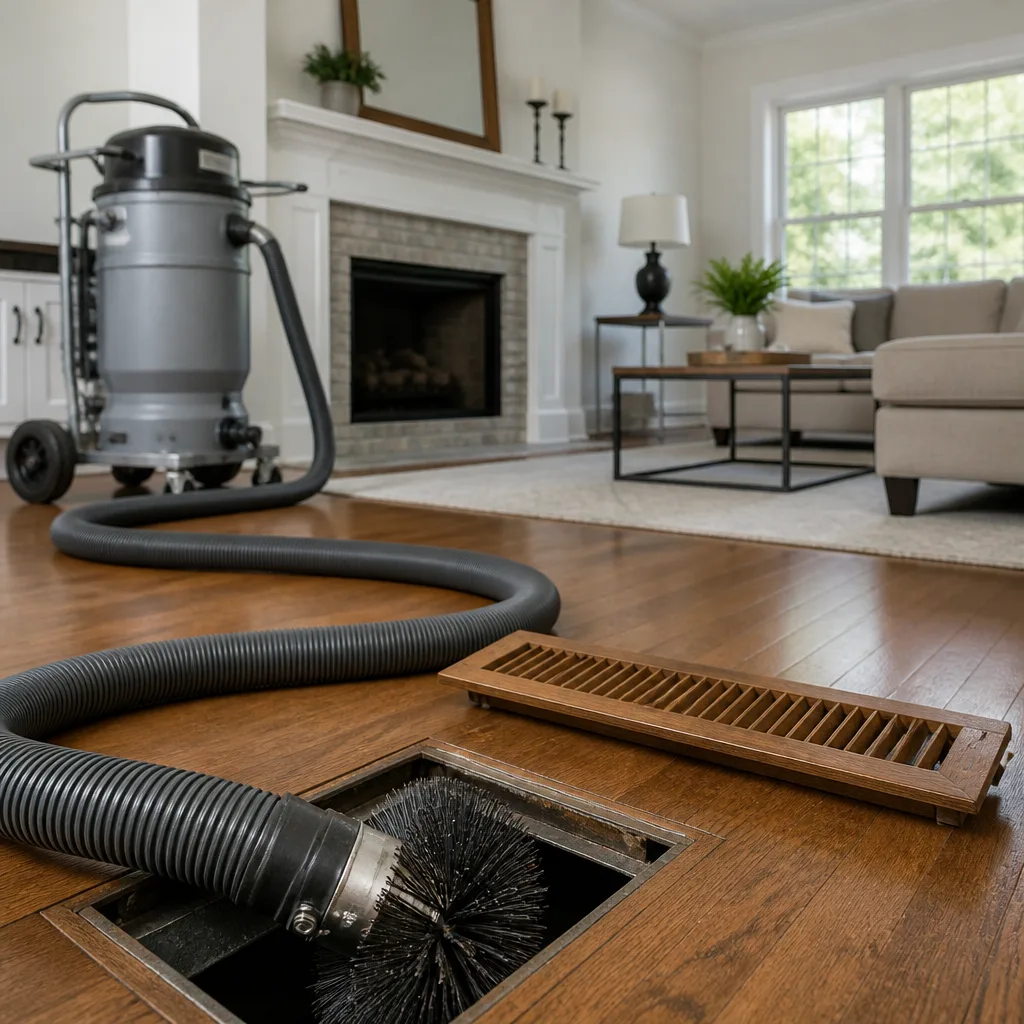 Whole-home duct cleaning
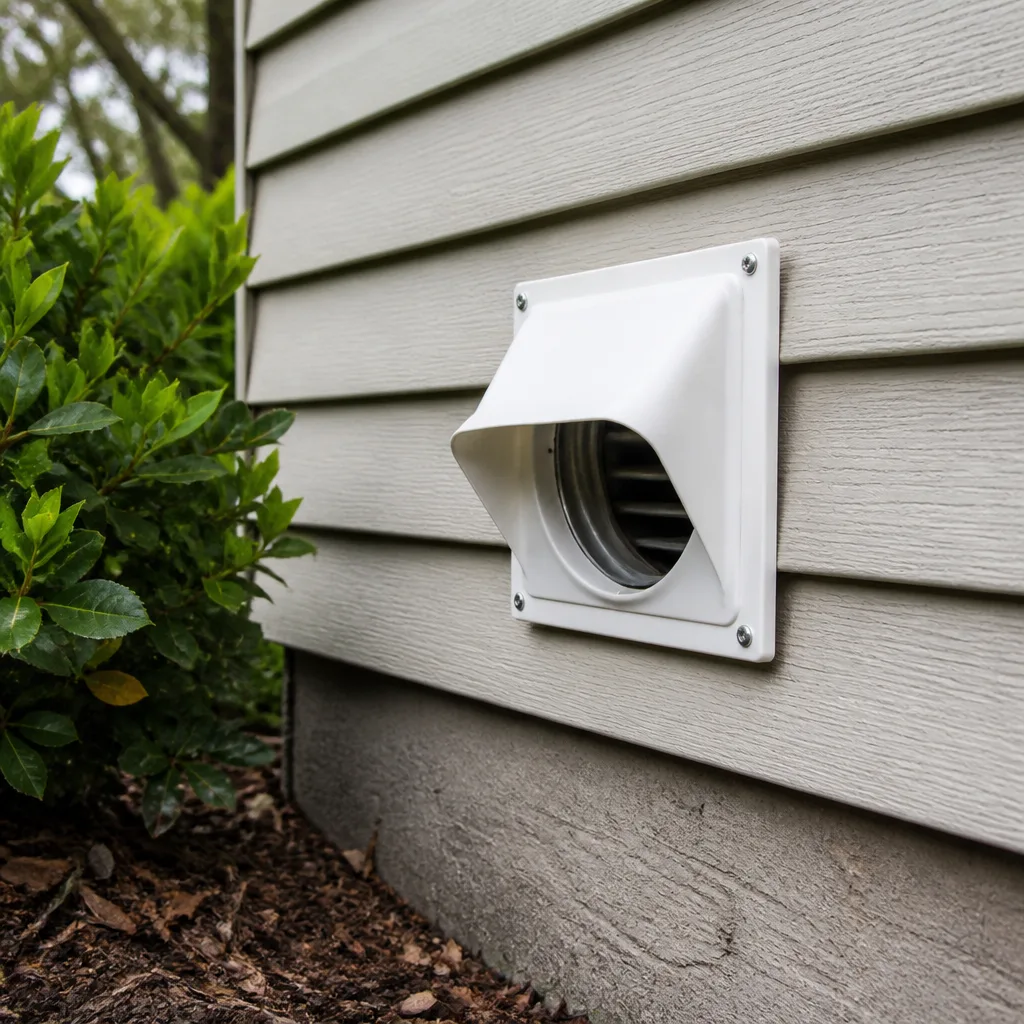 Dryer vent cleaning
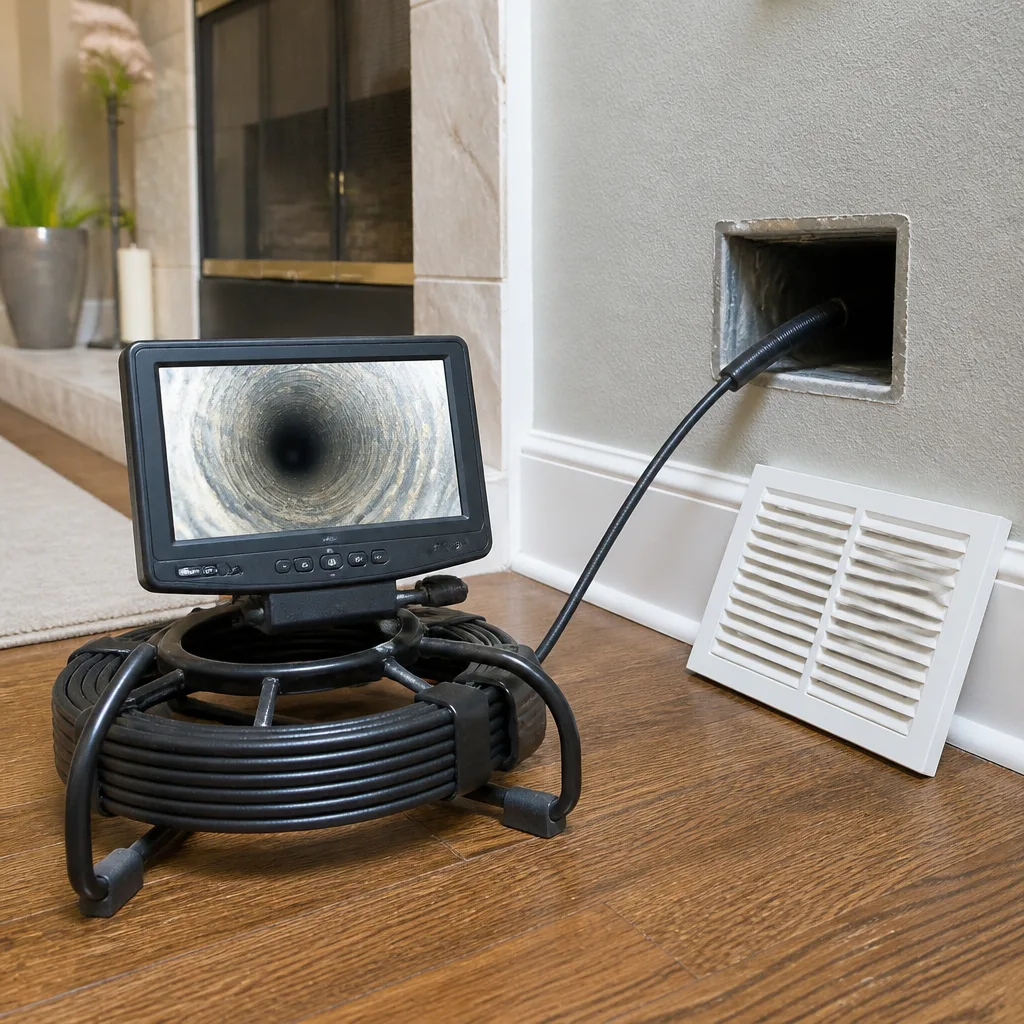 Camera inspection
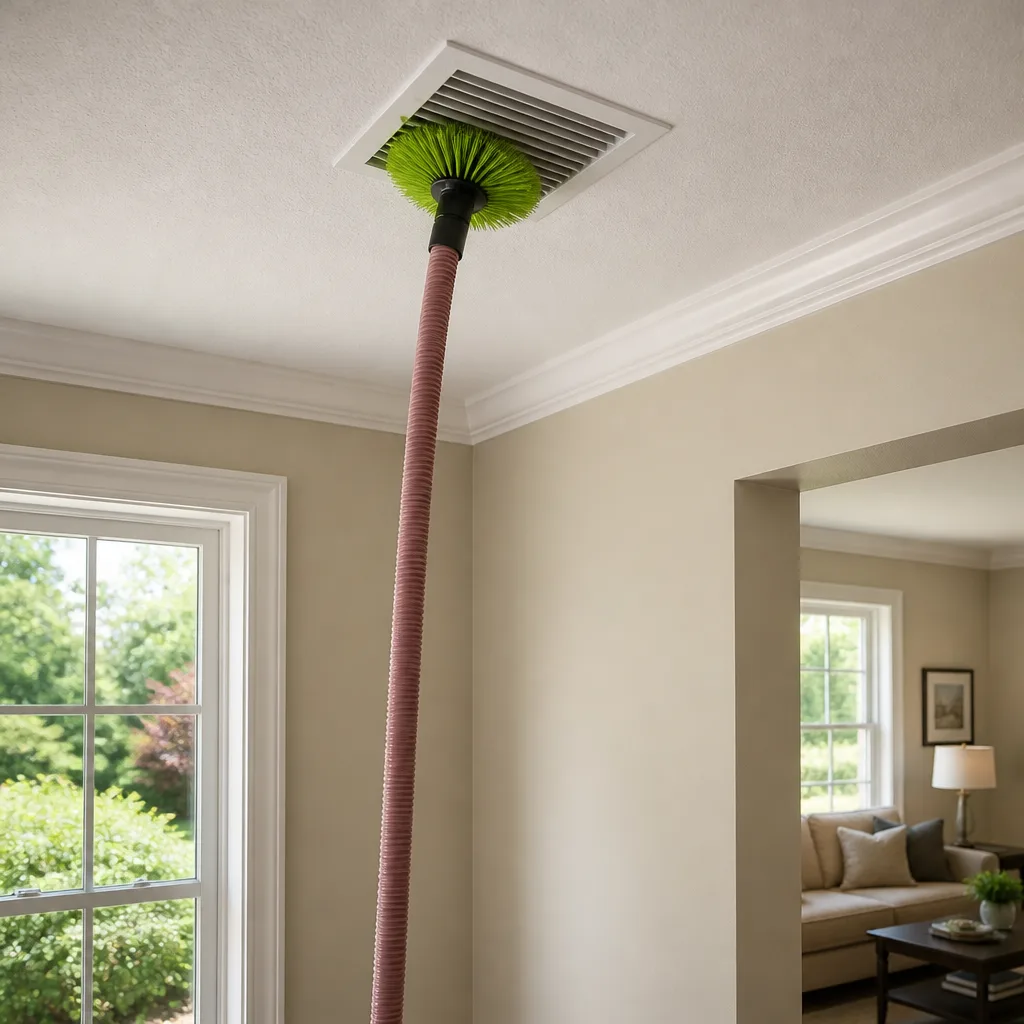 Sanitizing & deodorizing
Whole-system duct and dryer vent check with before-and-after photos - you see exactly what came out of your vents
That "$99 whole-house special" is a bait ad - the real number appears once they are in your hallway, or the "clean" is a shop-vac at the register. We photograph the inside of your ducts before and after instead.
Air Duct Cleaning Warning Signs: A Lexington Homeowner’s Reference Guide
Visible dust on supply registers is a late-stage warning sign, not an early one. By the time gray fuzz collects at the vent face, the main duct trunk feeding that register has usually been loading up with debris through one or two full heating and cooling cycles. The real early signals are quieter: a room that never quite warms up, a musty smell that appears only when the furnace kicks on, dust settling faster on the shelf under one specific vent. This guide maps those everyday symptoms to their likely duct causes so Lexington homeowners can act on the early clues instead of the late ones.
Quick Answer
The main warning signs of dirty or failing ducts are active dust blowing from supply registers, uneven room temperatures that trace back to restricted flex duct rather than HVAC capacity, musty odors that rise and fall with system runtime, and allergy symptoms that get worse rather than better after a cleaning. Each points to a different part of the system, and a few minutes of testing can separate normal household dust from a duct problem worth calling about.
Styles & brands we work with
- Whole-home duct cleaning
- Dryer vent cleaning
- Camera inspection
- Sanitizing & deodorizing
Table of Contents
- The White Cloth Test: Is Dust Settling or Being Blown?
- Why Some Rooms in Your Lexington Home Never Heat Evenly
- Musty Odor That Follows Your HVAC’s Runtime
- Allergies That Worsen After a Cleaning
- The Connection Inspection You Can Do Yourself
- The Dryer Vent Signal Homeowners Overlook
- Cleaning vs. Repair: Which Problem You Actually Have
- Upgrading Filtration After the Cleaning
The White Cloth Test: Is Dust Settling or Being Blown?
There’s a difference between dust that settles in a house and particulate that gets actively blown out of duct surfaces, and a white cloth at the register tells you which one you’re dealing with. Take a clean, dry white cloth or paper towel, hold it taut an inch or two in front of a running supply register, and leave it there for a few minutes. If the cloth picks up a light, even gray tint, that’s ambient household dust. If it picks up flecks, dark streaks, or a visible smear of debris within a couple of minutes, the duct surface upstream is shedding particulate into the airstream.
That’s a different problem from a dusty house. Settling dust is a housekeeping and filtration story. Blown particulate is a duct-surface story: the inside walls of the trunk line have accumulated a layer that the air movement is now loosening and delivering through the register.
Two things make the test more useful:
- Test more than one register. If only the register at the end of a long run fails the cloth test, the branch duct may be the source. If several registers throughout the house show flecks, the main trunk is the likely culprit.
- Test with the system running, not idle. Dust sitting in a duct with the blower off tells you almost nothing. The point is to test the airstream, not the duct surface.
Newer homes in Lexington subdivisions often have longer, more convoluted flex runs than older neighborhoods, and those extra turns mean more interior surface area to accumulate on and more places for airflow to loosen debris. A failing cloth test on more than one register is a reasonable prompt to have the interior of the system inspected directly.
Why Some Rooms in Your Lexington Home Never Heat Evenly
Uneven room temperatures usually get blamed on HVAC capacity, but restricted or disconnected flex duct is at least as common a cause. A single-story ranch built with long attic runs and a two-story colonial with a trunk buried in wall chases both hide the same problem: a section of flex duct that’s been pinched, sagged, torn, or pulled off its boot somewhere the homeowner can’t see.
The tell is in the pattern. A room that’s always a few degrees cool, no matter the season or the thermostat setting, is a delivery problem, not a capacity problem. The air handler is moving plenty of air. It just isn’t arriving.
A short set of observations narrows it down:
- Check the supply airflow at the problem register. Hold a hand or a tissue at the grille. A noticeably weaker flow than other rooms is the strongest single indicator of a restriction or disconnect upstream.
- Note whether the problem is seasonal or constant. A room that heats poorly but cools fine suggests the heating-side run may be kinked. Constant trouble across seasons points to a broken connection or collapsed section.
- Look for dust blowing at the boot. A visible haze at the point where the duct connects to the register is often a loose or slipped boot connection.
- Compare against the nearest rooms. If the room next door with a similar layout runs fine, the issue is likely isolated to that one run, not the system.
This is the kind of problem that cleaning alone does not fix. Our technicians are trained to diagnose duct integrity issues as well as clean interior surfaces, which is why we’re often called to floor plans in Lexington where temperature complaints have been quietly tolerated for years. If the duct is restricted or disconnected, cleaning and reconnecting solve the problem. If it’s collapsed, repair is the answer.
Musty Odor That Follows Your HVAC’s Runtime
Musty odor that rises and falls with HVAC runtime, rather than rising and falling with outdoor humidity, points to in-duct microbial growth rather than surface mold on walls or furniture. That distinction matters. Surface mold in a humid room tends to track the weather. Odor that appears only when the air handler runs is coming from inside the airstream.
Kentucky’s humid summers and shoulder seasons create conditions where uninsulated or poorly sealed ductwork in unconditioned spaces can stay damp long enough for growth to take hold. Flex duct that sags in a crawlspace or attic, or a run that has been disconnected from its boot, can pull humid outdoor or crawlspace air directly into the supply stream. Musty smell follows.
What to check on your own:
- Time the smell to the system. Note whether the odor shows up within a minute or two of the furnace or AC starting and fades when it stops. That’s the runtime pattern.
- Check the pattern by room. If the odor is strong in one room and mild in others, an individual branch duct or boot connection is more likely to be the source than the main trunk.
- Look at accessible duct insulation. Damp, compressed, or torn insulation in a basement, crawlspace, or attic is a red flag for condensation getting into the duct surface.
What we don’t recommend is spraying an over-the-counter product into a register and calling it solved. That addresses the symptom, not the source. Containment-grade work involves identifying which section of the system is damp, addressing the moisture issue, and cleaning the interior surface with contact equipment that physically agitates debris rather than relying on suction alone. On our jobs we bring Abatement Technologies containment and air-scrubbing equipment into the home, which is a remediation-level approach, not a cosmetic one.
Allergies That Worsen After a Cleaning
Allergy symptoms that get worse, not better, after a cleaning are usually a sign of filter bypass or duct leakage, not a failed cleaning job. The cleaning removed debris from surfaces. But if the filter doesn’t seat tightly in its slot, or if the return-side duct has a gap, the system is pulling unfiltered air past the work and delivering it back into the house.
A few things can cause a homeowner to feel worse after a cleaning:
- Optimism about one cleaning solving a chronic problem. If the source of the trigger (a return-side leak, a bad filter seal, or a disconnected return duct) wasn’t part of the job, cleaning the supply side alone won’t make a measurable difference in symptoms.
- Filter fit. A filter that’s undersized for its slot by even a fraction of an inch lets air bypass the media entirely. The HVAC pulls the path of least resistance, which is around any gap, not through the filter.
- Dislodged debris in a return plenum. If the return line was not part of the original scope, dust can be re-entrained into the airstream after a supply-side cleaning.
In our experience, the fix is diagnostic rather than another cleaning pass. A short inspection of the filter slot, return connections, and supply boots will usually find the bypass. Sealing the return-side gaps, seating the filter correctly, and (where appropriate) confirming the supply-side surfaces are still clean solves it.
If allergies are the primary complaint, a whole-home filtration recommendation may be worth considering. The team sources from Honeywell and Aprilaire filtration product lines, which lets us recommend a filter setup matched to the system’s airflow rather than just dropping in a higher-MERV filter that the blower may not move efficiently.
The Connection Inspection You Can Do Yourself
A short visual inspection at accessible duct connections catches disconnects before they turn into a bigger air quality problem. You don’t need tools. You need a flashlight and a few minutes in the basement, crawlspace, or attic wherever flex duct and metal trunk lines meet.
- Find the accessible air handler and trunk. Most Lexington homes have at least one section of duct visible in a basement, crawlspace, garage ceiling, or attic. That’s where to look first.
- Trace the flex runs from boot to trunk. Follow each flexible duct from where it connects at the register boot back to the main metal trunk.
- Check every connection point. Look at the boot connection (where flex meets the register), the collar connection (where flex meets the trunk), and any splice between two flex sections.
- Look for sagging, kinks, or tears. A flex duct that sags more than a shallow U, has a sharp bend, or shows a visible tear in the outer jacket is a likely restriction or leak.
- Watch for separated connections. A flex duct that isn’t actually touching its collar, with a visible gap, is a full disconnect. That’s pulling attic or crawlspace air straight into the supply stream.
- Check for moisture or staining. Damp foil, rust at a metal collar, or dark staining around a connection indicates a leak that has been active for a while.
If you find a disconnect, don’t just tape it and move on. The interior of that run is likely contaminated with whatever the system has been pulling through it. The right move is a proper repair of the connection plus a cleaning of the affected run. This is where having air duct cleaning and repair available from one company saves a second call.
The Dryer Vent Signal Homeowners Overlook
A dryer that takes longer than it used to is the most common early signal of a blocked dryer vent, and it’s the one homeowners most often rationalize away. Lint accumulates on the inside walls of the vent run and gradually reduces airflow, which makes the dryer work harder and dry more slowly. By the time the dryer stops heating properly, the restriction has usually been building for months.
Signals worth acting on:
- Dryer cycles that no longer finish in one pass.
- Clothes that feel hot but still damp at the end of a cycle.
- The exterior vent flap failing to open fully, or opening only intermittently, when the dryer runs.
- Excess lint on the floor or wall around the dryer itself.
- A vent run that terminates in a long, convoluted path or has a corrugated foil section that traps lint at every ridge.
Dryer vent cleaning is one of the leading causes of residential house fires when neglected, and it’s a straightforward job: professional extraction of lint from the full vent run, confirmed visually at the exterior termination. We offer dryer vent cleaning as a standalone service because a cleaning visit for ducts is not the same job as clearing the dryer run, and one doesn’t always prompt the other in a homeowner’s mind. One call covers both.
Cleaning vs. Repair: Which Problem You Actually Have
Cleaning and repair solve two different problems, and misdiagnosing which one you have wastes money either way. Cleaning addresses accumulated debris on the interior surfaces of a sealed duct system. Repair addresses breaches, disconnected joints, collapsed sections, and other integrity failures that let air into or out of places it shouldn’t.
| Symptom | Likely Category | Typical Response |
|---|---|---|
| Flecks on white cloth at multiple registers | Cleaning | Interior surface cleaning with contact equipment |
| One room consistently under-heated or under-cooled | Repair | Diagnose flex restriction/disconnect, repair |
| Musty odor that tracks HVAC runtime | Cleaning + moisture source | Identify damp section, clean, address moisture |
| Symptoms worsen after cleaning | Repair | Inspect filter slot and return-side connections |
| Visible gap at a boot or collar | Repair | Reconnect, then clean the affected run |
| Dust re-collects quickly after cleaning | Repair | Find the leak that is re-entraining debris |
In our experience, the cleanest answer for the homeowner is to have both capabilities in one call. Doing the diagnostic walk-through before quoting a cleaning is how you avoid cleaning a system that actually needs a joint resealed first. We combine air duct cleaning with repair specifically so a homeowner doesn’t hear “that’s a different contractor” halfway through a job.
Upgrading Filtration After the Cleaning
The cleaning is half the job. What keeps the system clean is filtration, and the right filter is not always the highest number on the box. A filter that resists airflow can starve a blower and create the very temperature problems described earlier in this guide. That’s why filter selection is a system-specific decision, not a shopping-cart one.
We work with Honeywell and Aprilaire product lines because both offer whole-home filtration options that are designed to be integrated into the HVAC system rather than dropped into a slot as an afterthought. A media cabinet, a whole-home purifier, or a properly sized filter setup can sit in the airstream without compromising airflow the way an oversized filter in a residential filter slot sometimes does.
A few things to consider when thinking about filtration:
- Filter slot bypass. Before upgrading the filter, confirm the slot itself seats the filter fully. If it doesn’t, the upgrade is wasted money.
- Return-side capacity. A whole-home filter needs enough return-side airflow to work as designed. That’s a measurement question, not a guess.
- What the cleaning turned up. If a cleaning visit uncovers chronic dust from a specific section, filtration that addresses the whole home’s return path is often more useful than a filter aimed only at the problem room.
If filtration upgrades are on your mind, ask for them as part of the same visit. Our team can recommend a setup matched to the system, not just a filter to drop in.
Common Mistakes to Avoid
- Treating one dirty register as the whole picture. A single dusty vent is often a local leak or a boot problem. Look at three or four registers before drawing a conclusion about the whole system, especially in a two-story Lexington home where supply runs are long.
- Buying a “clean the ducts” coupon without asking what equipment will arrive. A shop vacuum is not contact cleaning. Ask specifically what equipment is being brought into the house: a Rotobrush or Nikro system physically agitates and extracts debris, which is what you’re actually paying for.
- Assuming a higher-MERV filter is always better. On many Lexington homes, an oversized filter in an undersized slot creates more airflow restriction than the system was designed for. Filter fit and slot sealing matter first.
- Not sealing solved leaks. A reconnected boot with no seal will disconnect again. Repair has to include the seal, not just the reconnection.
- Skipping the crawlspace or attic inspection after a symptom appears. Temperature and musty-odor problems often trace back to a run in an unconditioned space that a five-minute visual inspection would catch.
- Forgetting the dryer vent because the ducts were just cleaned. These are two different systems. Dryer vents accumulate lint on a different timescale and don’t share the duct cleaning visit’s airflow.
- Choosing the lowest quote without asking what “cleaned” means. Whole-system cleaning means the supply trunk, the branch runs, the register boots, and (where accessible) the return side. Ask what’s in scope in writing.
See the difference
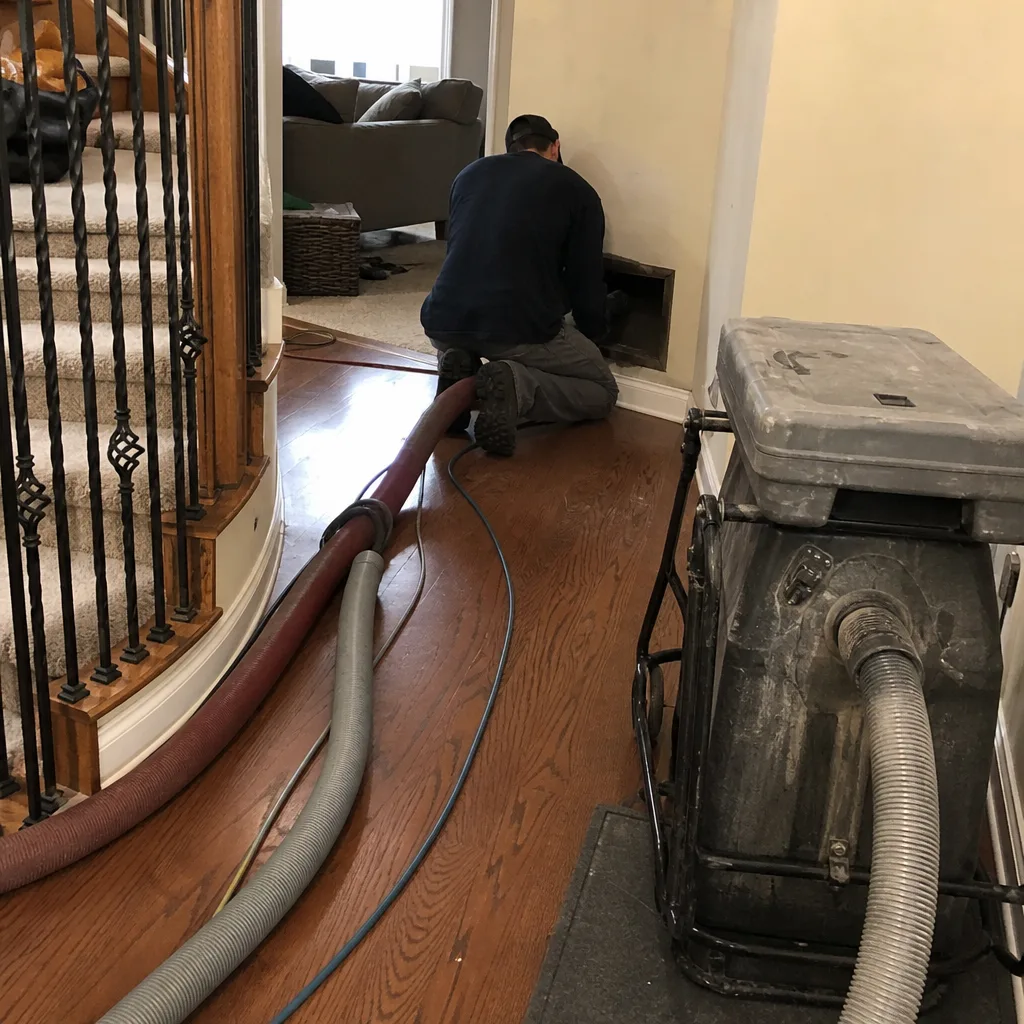 Before
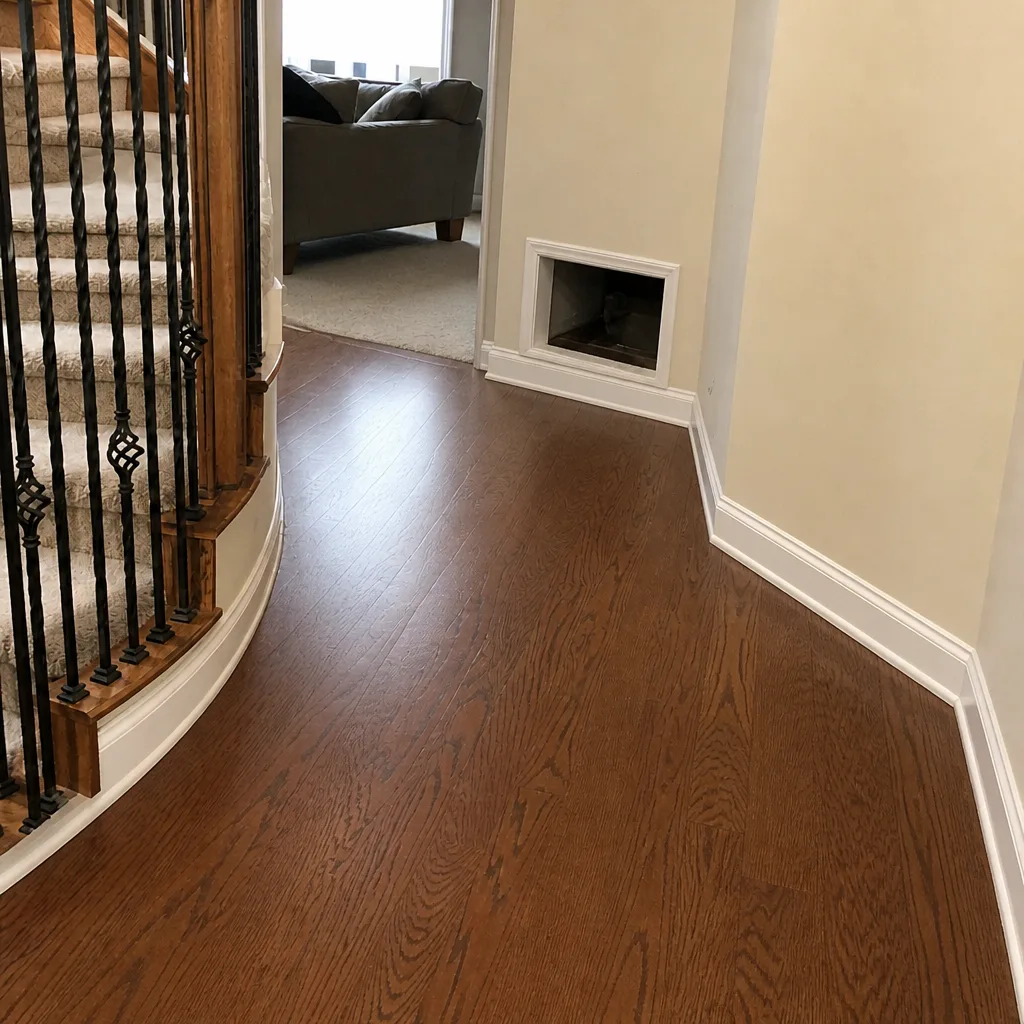 After
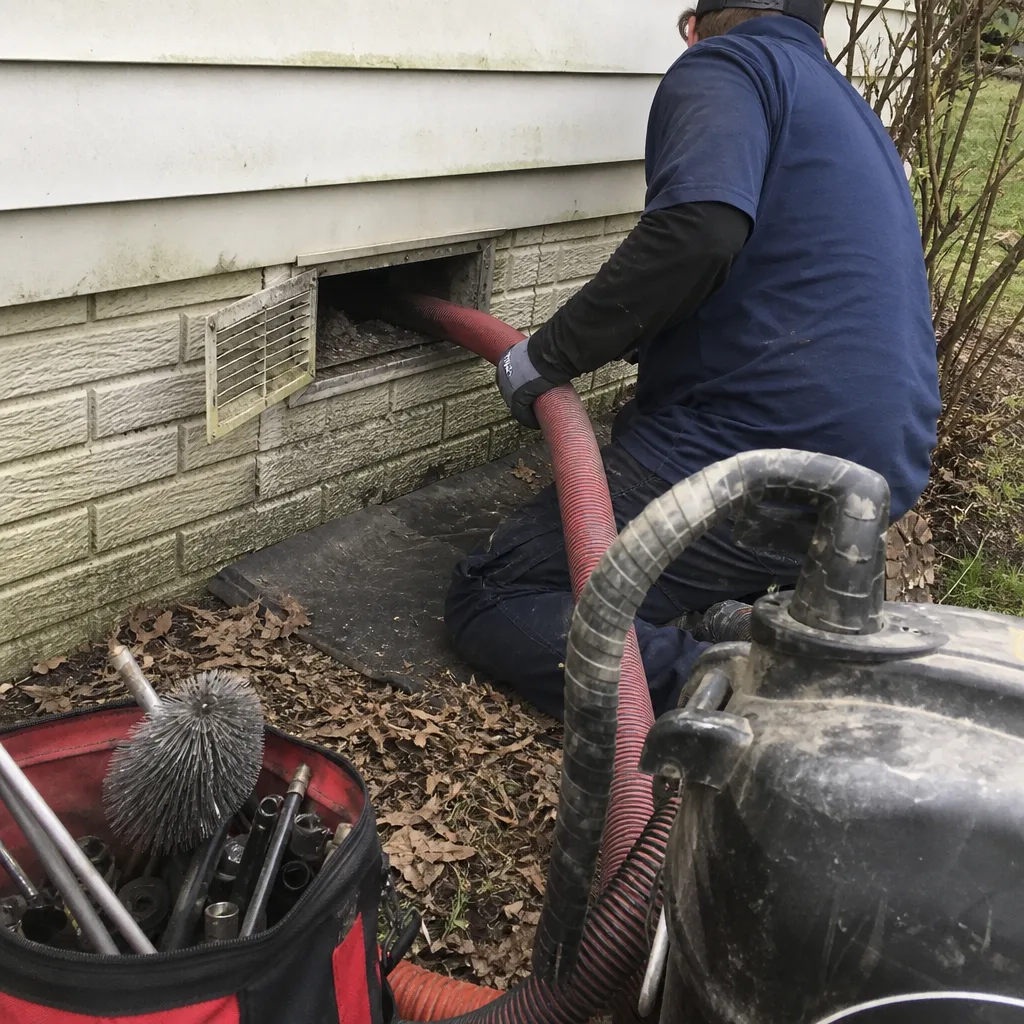 Before
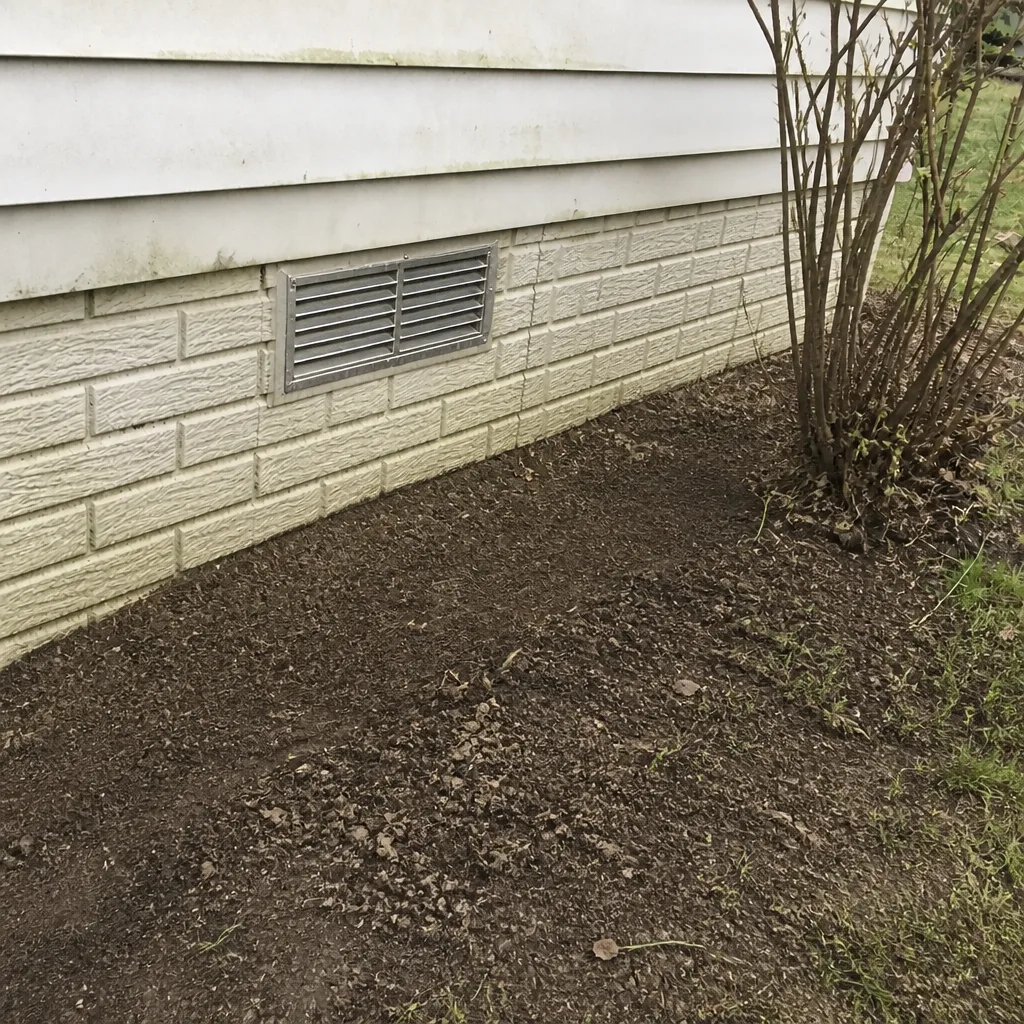 After
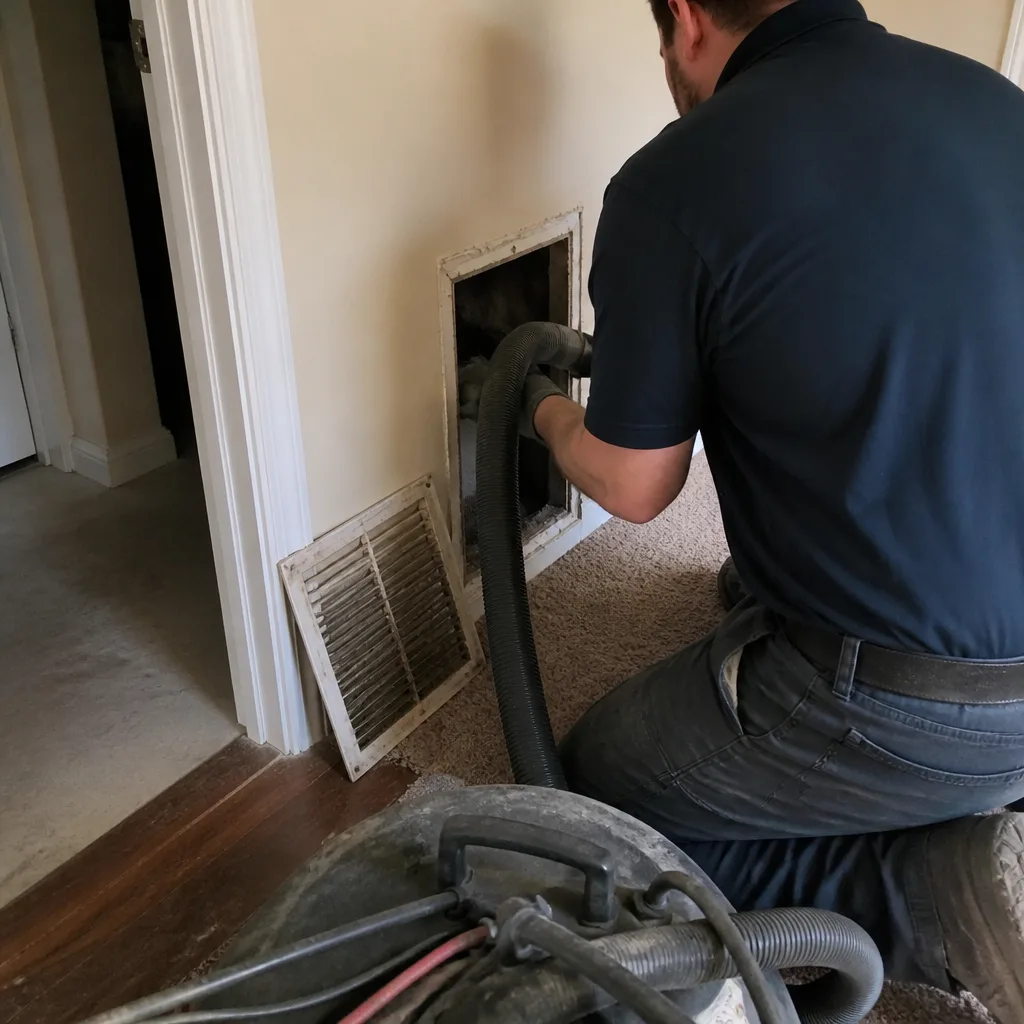 Before
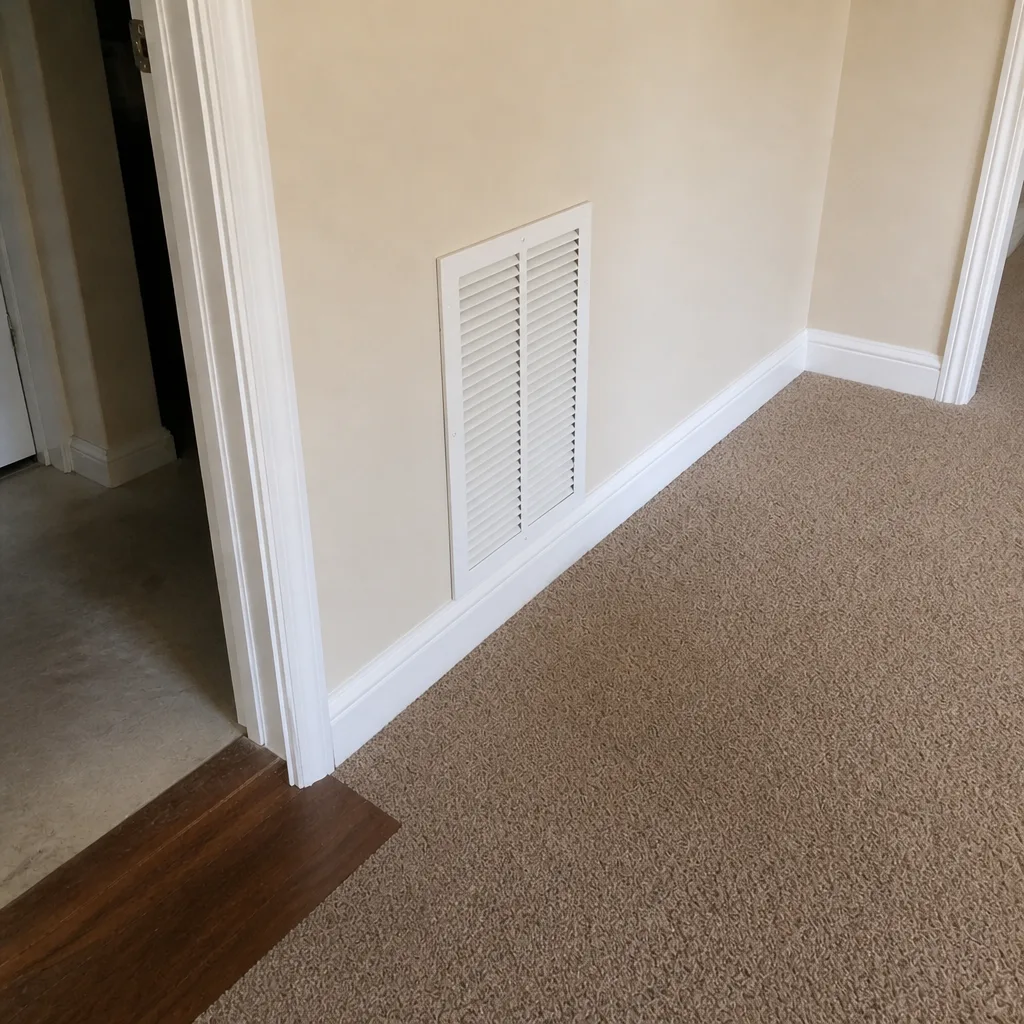 After
When to Call a Professional
Call a professional when you can see the warning sign, not just suspect it. That means visible flecks on a white cloth at more than one register, a room that’s been noticeably cooler for two full heating or cooling seasons, a musty odor that tracks the HVAC’s runtime, symptoms that got worse after a cleaning, or a visible disconnect at a boot or collar during your own inspection. Also call if your dryer routine has quietly doubled and the exterior flap barely opens. Duct Cleaning Lexington offers free estimates in Lexington and can determine whether the problem is cleaning, repair, or both: call (877) 331-2339. We answer 24/7. Fast dispatch from 7am to 7pm, Sunday through Friday. Our technicians have up to 8 years of experience diagnosing exactly these patterns.
Frequently Asked Questions
Typical estimates for whole-system cleaning on a single-family Lexington home fall in a wide range because system size, accessibility, and whether repair is needed vary house to house. You’ll get a written estimate per system, and that written estimate sets the final price. Call (877) 331-2339. We answer 24/7. Fast dispatch from 7am to 7pm, Sunday through Friday, and the estimate is free.
The cheapest quotes usually reflect either a small scope or consumer-grade equipment. Some coupons price per vent, which is not how a whole-system cleaning should be priced, and the visit tends to grow in scope once the technician is on site. We quote one flat price per system, agreed before work starts, with no per-vent pricing and before-and-after photos of your own ducts. Call (877) 331-2339 for an exact quote. Estimates are free.
Before-and-after photographs of your own ducts are the simplest check, and any legitimate provider should be able to produce them. We photograph the interior before and after each system, so you can see the difference rather than take it on faith. Call (877) 331-2339 with any questions about the process. Estimates are free.
The honest answer is “as the symptoms require,” not on a fixed calendar. Homes with pets, recent renovations, or a system that hasn’t been serviced in years may see benefits sooner than a newer, well-filtered home. If the white cloth test at multiple registers is failing, or you’re seeing musty odor that tracks HVAC runtime, that’s the signal. Call (877) 331-2339 to talk through timing for your home. Estimates are free.
They’re usually delivery problems, not capacity problems. A room that consistently runs cool while other rooms run fine points to a restricted or disconnected flex run, not to an air handler that’s too small. A musty smell that follows HVAC runtime points to the duct interior, not to the outdoor humidity. If you want the pattern diagnosed, call (877) 331-2339. Estimates are free.
No, and that’s worth saying plainly. A shop vacuum has neither the agitation required to loosen debris from duct interior walls nor the containment to keep that debris out of your living space during the job. Professional-grade contact equipment paired with air-scrubbing containment is what distinguishes a real cleaning from surface suction. Call (877) 331-2339 to discuss a proper cleaning for your Lexington home. Estimates are free.
The Bottom Line
The warning signs of a duct problem show up early, in everyday symptoms: dust that goes beyond settling, uneven room temperatures that trace to a specific run, musty odor tied to HVAC runtime, and allergy symptoms that worsen after a cleaning. Each points to a different part of the system, and each is worth a short inspection. Clean what’s dirty, repair what’s broken, and filter the whole home properly afterward. Homeowners across Lexington can use this guide to act on the early signs rather than the late ones. Whether the pattern you’re seeing is cleaning, repair, or a filtration upgrade, one call covers it.
If any of the warning signs above match what you’re seeing at home, the fastest way to know what’s actually going on is to have the system inspected directly. We operate professional-grade Rotobrush and Nikro contact-cleaning systems and Abatement Technologies containment equipment because the difference between a real cleaning and a surface pass is what arrives in the house. We clean it, and if it’s broken, we fix it, with one flat price per system agreed before work starts and before-and-after photos of your own ducts.
Call (877) 331-2339 for a free estimate. We answer 24/7. Fast dispatch from 7am to 7pm, Sunday through Friday. Every job is diagnosed and priced per system, and you’ll know what you’re paying before the equipment leaves the vehicle.
Written by the team at Duct Cleaning Lexington.