
Emergency Air Duct Cleaning Near Me: What Lexington Homeowners Should Do First
If you’ve found rodent droppings in a vent or smelled smoke in every room after a small kitchen fire, your instinct is to call a duct cleaner right away. Do that first and you may hand your insurance company a reason to reduce or deny the claim. The sequence matters: document, shut the system down, then call. Here’s the order that protects both the remediation and your coverage in Lexington.
This guide walks through what actually counts as a duct emergency, the triage steps for the three scenarios we see most, and where a standard cleaner stops and a licensed remediation contractor has to step in. If you’d rather not sort through it alone, call (877) 331-2339. We answer 24/7. Fast dispatch, 7am-7pm.
What Actually Counts as a Duct Cleaning Emergency in Lexington?
A duct emergency is any situation where contamination is actively spreading through the HVAC system and into living space: post-fire soot, sewage or flood water intrusion into ductwork, or confirmed rodent or pest activity inside the ducts. An overdue cleaning, a musty smell, or visible dust at the registers is urgent but not an emergency, and the scope of work is very different.
The distinction affects two things. First, the response timeline. A true emergency calls for isolating the system and scheduling fast dispatch. An overdue-but-stable duct system just needs a scheduled cleaning. Second, the required scope. Emergency contamination almost always means containment, air scrubbing, possible duct replacement, and often an insurance claim. A routine cleaning means contact agitation and extraction, full stop.
In Lexington, we see the emergency category most often after kitchen fires, sump or sewer backups in older housing stock, and rodent activity in crawl spaces that connects to flex duct runs. If you’re not sure which category you’re in, describe what you’re seeing and hearing to a technician. Getting the classification right on the first call saves a lot of back-and-forth later.
One easy test: does the HVAC system spread the problem when it runs? If running the fan makes the smell or the dust worse, isolate it. If it doesn’t, you’re likely in the urgent-but-scheduled category.
The Triage Sequence: What to Do Before Any Cleaner Arrives
Whatever the cause, the first thirty minutes follow the same logic: stop the system from spreading contamination, protect the people in the house, then document everything. Skipping straight to the phone call is the mistake that costs homeowners the most, and it’s the one we hear about most often.
- Shut the HVAC system off at the thermostat. Set it to “off,” not “fan on.” A running blower pushes soot, spores or rodent debris through every supply register in the house within minutes.
- Close the registers in affected rooms. This doesn’t seal the system, but it slows migration to rooms that are still clean.
- Remove the return-air filter and bag it. A contaminated filter is evidence. Seal it in a plastic bag, label it with the date, and don’t throw it away until your claim is settled.
- Keep people and pets out of affected rooms. For smoke or sewage contamination, this is a health precaution, not an inconvenience.
- Photograph everything before anyone touches it. More on this below.
- Call for an assessment. Describe the cause, the rooms affected, and whether the system was running when the contamination happened.
That last detail matters more than people expect. A system that was running during a fire pulls soot deep into the trunk lines; one that was off may have contamination confined to a smaller area. Tell the technician which it was.
Post-Fire and Smoke Contamination
Soot is acidic and it settles into duct lining, insulation and the blower compartment. Shut the system down, don’t run the fan to “clear the air,” and photograph the visible soot at the registers. If the fire department responded, get the incident report number before you call anyone.
Sewage or Water Intrusion
If flood or sewage water reached the ductwork, treat the ducts as contaminated until proven otherwise. Don’t run the system to dry things out. Photograph the water line on any duct material you can see, and note the date and time the water appeared. Porous duct lining that has been wet with sewage is generally not cleanable and will need replacement, which the assessment should confirm in writing.
Confirmed Rodent or Pest Infestation
Droppings, nesting material or gnaw marks in a register mean the ducts need cleaning and the duct integrity needs checking. Rodents chew through flex duct and enter at breaches, so cleaning without finding the entry point just resets the clock. Photograph what you found, seal off the room, and mention whether you’ve seen activity elsewhere in the house.
What to Document Before Cleaning Begins (For Your Insurance Claim)
Insurance adjusters want a timeline, evidence of cause, and proof of scope. Capture four things before any cleaning starts: dated photographs of the contamination at each register and at the air handler, the date and time the event occurred, the incident or claim reference number, and a written assessment from the contractor describing what was found and what needs to be done.
- Photos with context. A close-up of soot or droppings plus a wide shot of the same register tells the adjuster where it is and how much.
- Your removed filter, bagged and labeled. It’s the single most useful piece of physical evidence most homeowners throw away.
- Any air quality readings taken on-site. If the assessment includes particle readings before and after, keep them with the claim file.
- A written scope, not a verbal quote. The written assessment is what the adjuster works from, and it’s what the final price is based on.
Keep the documentation even if you don’t file a claim right away. It’s much harder to reconstruct a week later, and photographs taken after cleaning has begun carry far less weight.
Cleaner or Remediation Contractor: Who Do You Actually Need?
A duct cleaning company removes contamination from ductwork. A licensed remediation contractor handles contamination that extends beyond the ducts into building materials, or that involves regulated hazards like sewage or mold growth on structural surfaces. Sometimes you need one, sometimes both, and knowing which before you call saves you a wasted visit.
Sewage contamination in ductwork is the clearest case for a remediation contractor, because the scope crosses into materials and possibly structural cleanup. Post-fire soot that stays inside the duct system is usually a cleaning job, but if the fire damaged insulation, framing or the air handler itself, remediation comes first. Rodent infestation is usually a cleaning and repair job, with pest control handling exclusion.
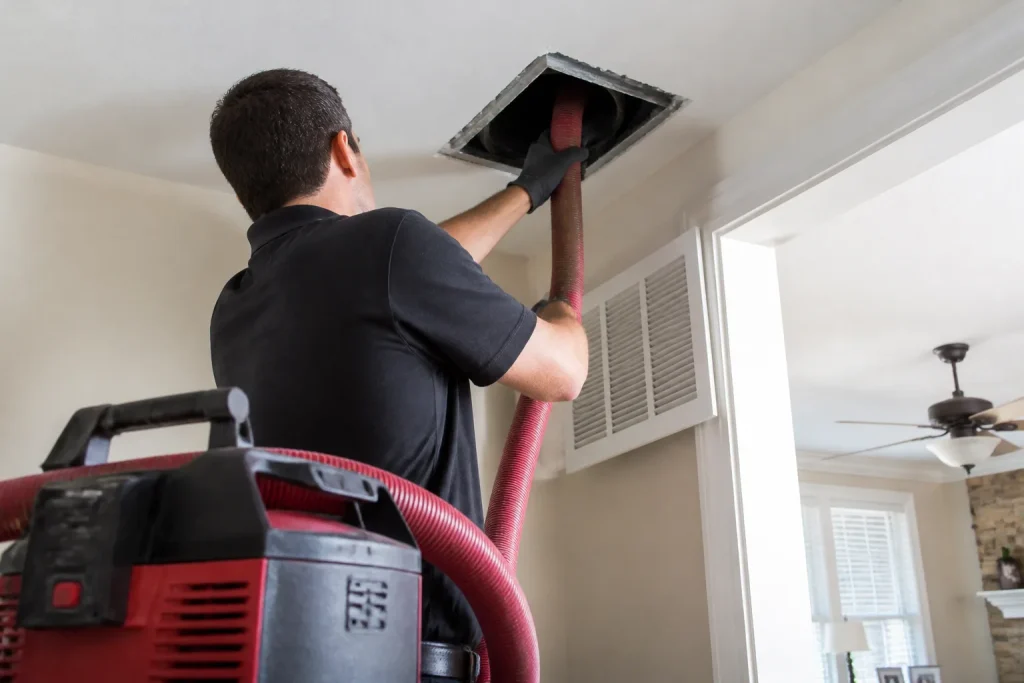
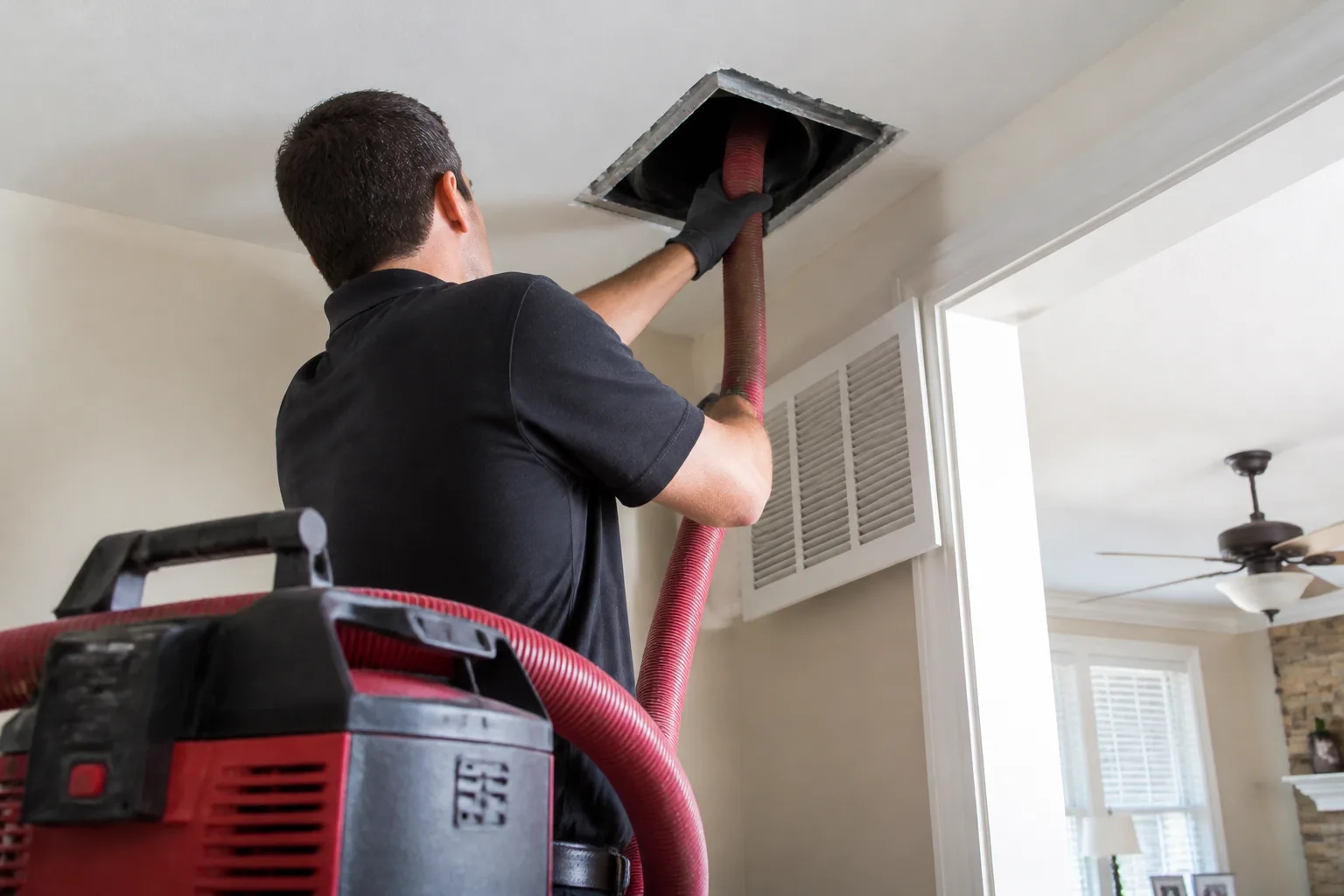
This is where equipment separates companies. Contact cleaning with a Rotobrush system agitates debris off duct walls while negative air pressure holds it in the extraction path, rather than relying on suction alone. Abatement Technologies air scrubbing keeps the work area under containment so contamination doesn’t migrate into the rest of the house during the job. That’s commercial and restoration-grade discipline applied to a residential system, and it’s what a real remediation scenario requires.
Ask directly on the phone whether the company can handle repair as well as cleaning. Rodent and water damage usually leave breaches behind, and one company handling both cleaning and air duct cleaning scope in a single visit means the system goes back together correctly. Our technicians have up to 8 years of experience with these situations, and in our experience the repair step is the one homeowners forget to ask about until it’s too late.
What to Do While You Wait for the Technician
Once the system is off and the contamination is documented, your job is containment: keep the affected area closed off, keep the HVAC off, and avoid anything that stirs dust or pulls air through the house. Don’t run a shop vacuum near contaminated registers, don’t run ceiling fans in affected rooms, and don’t open windows on a windy day next to a contaminated return.
If you have a portable air purifier with a HEPA filter, running it in a clean room away from the contamination is reasonable. Don’t put it in the affected room; a purifier pulling soot or spores just loads its filter faster and does little for the source. Leave the HVAC filter slot empty but covered.
Write down what happened while it’s fresh: the date, the cause, which rooms were affected, and whether the system was running. That timeline supports both the written assessment and any claim. We answer 24/7 for exactly this reason, because the details fade fast and the call is easier while the sequence is still clear in your head. A call outside dispatch hours is booked into the next opening, Sunday through Friday, 7am to 7pm.
When to Call a Pro (and What to Ask)
Call a professional the moment contamination is confirmed inside the duct system, and call a remediation contractor first if sewage, structural fire damage or visible mold on building materials is involved. For overdue cleanings and musty smells without a confirmed source, a scheduled assessment is the right first step, not an emergency call.
Ask three questions on the phone. Does the company use contact cleaning and negative air equipment, or just suction? Can it repair duct breaches found during the job, or will it hand you off to someone else? Will the written assessment describe the scope before work starts, so you know what you’re approving?
While the system is being assessed, it’s worth asking about the rest of the house’s air path. A dryer vent cleaning addresses lint buildup that’s a genuine fire risk independent of anything happening in the ducts, and a whole-home filtration recommendation from Honeywell or Aprilaire product lines is often the right follow-up once contamination is cleared. Our Lexington service covers all three: cleaning, repair, and air quality guidance, so one call covers it. If the system’s been running dirty for a while, we can also tell you whether an Aprilaire filter upgrade makes sense before the next season.
Related services in Lexington: air duct cleaning, dryer vent cleaning, and air duct repair.
The Bottom Line
Emergency duct situations come down to sequence. Shut the system off, document everything with dated photos and a bagged filter, then call. Confirm whether you’re dealing with a cleaning job or a remediation job, and make sure the company can handle repair as well as cleaning so the system goes back together properly. Commercial-grade equipment and a written scope are what separate a real fix from a surface pass.
If you’re in Lexington and need help, Duct Cleaning Lexington offers free estimates. Call (877) 331-2339. We answer 24/7. Fast dispatch, 7am-7pm, Sunday through Friday. Estimates are free and the price is set per job by the written estimate. For a broader look at what we do, start at Duct Cleaning Lexington.
Frequently Asked Questions
Emergency duct cleaning in Lexington is priced per job by a written estimate after the assessment, not by the vent or the hour, and the estimate itself is free. Post-fire, sewage and rodent scenarios all carry different scopes, which is why no honest company quotes a number before seeing the system. Call (877) 331-2339 for an exact quote.
Often it can, but only with proper documentation, which is why photos, the bagged filter and a written assessment come before any cleaning. Whether a specific claim is covered is up to your insurer and your policy. Call (877) 331-2339 and we can help you capture what the adjuster will ask for.
No. Running the fan during or after a fire pushes soot into every supply line and the blower compartment. Shut the system off at the thermostat, close the registers in affected rooms, and leave it off until a technician assesses it. Call (877) 331-2339 to schedule the assessment.
You need a licensed remediation contractor when contamination extends beyond the ducts into building materials, or when sewage or visible mold on structural surfaces is involved. Contamination confined to the duct system itself is typically a cleaning and repair job. Call (877) 331-2339 and describe what you’re seeing; we’ll tell you honestly which category you’re in.
Written by the team at Duct Cleaning Lexington.
Need Air Duct Cleaning Help?
Call Duct Cleaning Lexington - licensed & insured, here with fast help in Lexington.
(877) 331-2339